Market Intelligence
Everything You Need to Know About Hancock Park
Hancock Park is a designated Historic Preservation Overlay Zone (HPOZ) covering roughly 1.4 square miles north of Wilshire Boulevard, bounded by Highland Avenue, Beverly Boulevard, Rossmore Avenue, and Melrose Avenue. The neighborhood was developed in the 1920s by the Hancock family as one of LA's first planned upscale residential districts, organized around the Wilshire Country Club. Today it remains the most concentrated preserved 1920s residential architecture in central Los Angeles.
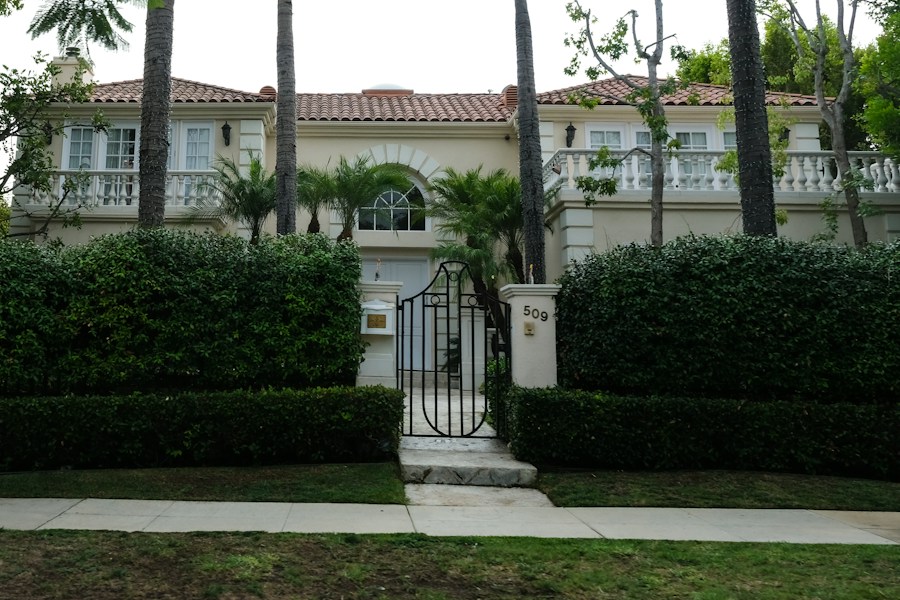
The housing stock is dominated by 1920s estate-scale single-family homes on 12,000 to 25,000 square foot lots — Tudor Revival, Spanish Colonial Revival, French Normandy, Mediterranean, and Georgian estates designed by named period architects including Paul R. Williams, John Byers, Wallace Neff, and Roland Coate. Median sits at $3.4M with appreciation at 6.4% year-over-year — moderate but with exceptional downside resilience anchored by HPOZ protection.
The HPOZ designation is one of the most important structural facts about Hancock Park real estate. Renovation, demolition, and new construction require approval from the HPOZ board and must conform to historic preservation guidelines. This protects the neighborhood's 1920s architectural character but adds complexity to renovation projects. Buyers should engage HPOZ-experienced architects and consultants. The benefit: Hancock Park has not been damaged by teardown-rebuild cycles that have changed nearby Beverly Grove and parts of Beverly Hills.
Hancock Park Elementary is one of the strongest LAUSD elementary schools in central Los Angeles and a meaningful driver of family relocation demand. John Burroughs Middle School and the various private alternatives within 10 to 15 minutes (Marlborough, the Mirman School for gifted students, Harvard-Westlake middle school in Beverly Glen, Wilshire Boulevard Temple Day School) round out the school path. For families specifically choosing Hancock Park Elementary, the school district premium is a primary pricing factor.
Larchmont Village, accessible by a 10-minute walk from much of Hancock Park, provides the neighborhood's walkable retail and dining anchor — the Larchmont Bungalow, Burger Lounge, Larchmont Wine & Cheese, Le Pain Quotidien, and the Sunday Larchmont Farmers Market. The Wilshire Country Club anchors the social infrastructure (private membership, founded 1919). The lifestyle is residential, community-oriented, and discreet — Hancock Park is known for old-LA quiet wealth rather than visible prestige.
The transaction market in Hancock Park is bifurcated by price point. $2.5M to $5M Hancock Park Elementary-zoned inventory moves at relatively normal velocity (3 to 5 weeks), while $5M+ estate inventory often takes 2 to 6 months. Off-market activity is meaningful — entertainment industry and established professional networks generate significant private transaction flow. The 28-day average days-on-market reflects a smaller more selective luxury buyer pool and longer due diligence cycles typical of $3M+ HPOZ-zone transactions.
For multi-generational holders and architecture-focused buyers, Hancock Park offers something that no other central LA neighborhood can match: HPOZ-protected 1920s estate architecture with strong neighborhood elementary, Old LA cultural orientation, and structural value protection that does not depend on Westside brand recognition. The neighborhood has held value through every recent market cycle and the architectural character is structurally guaranteed to remain intact through the next several decades.