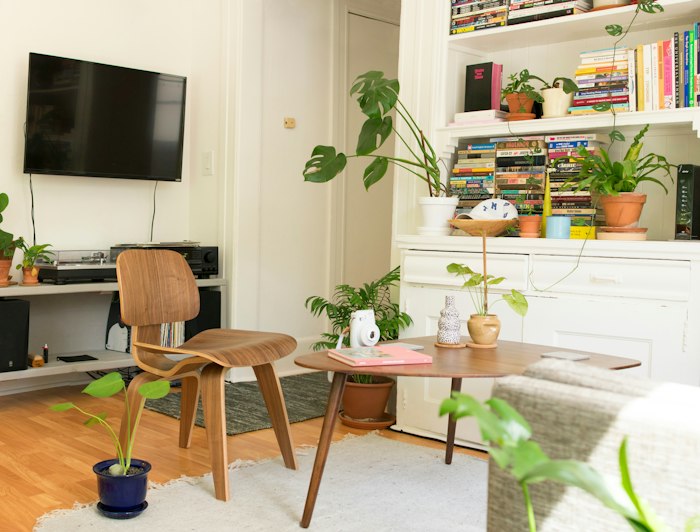
Miracle Mile
Median $1,450,000
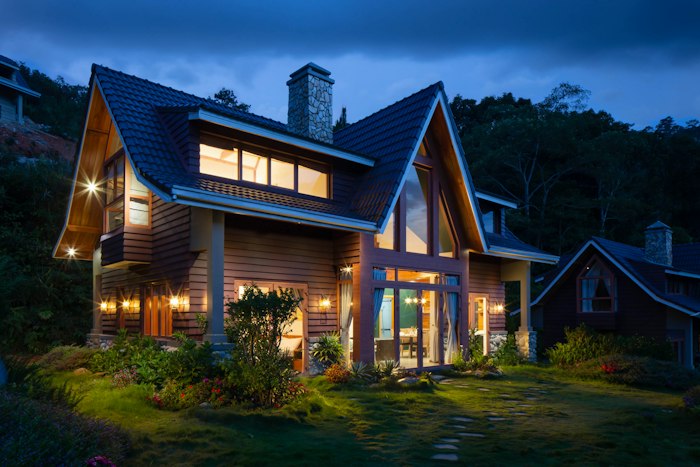
Hancock Park
Median $3,400,000
Both are pre-war LA at its best. The price gap is real, and the buyer profiles are not interchangeable.
Miracle Mile and Hancock Park are the two most architecturally significant pre-war neighborhoods in Mid-Wilshire Los Angeles, and they appeal to buyers with similar aesthetic preferences but very different budgets and life stages. Miracle Mile runs along Wilshire Boulevard between Highland and Fairfax, anchored by Museum Row (LACMA, the Petersen, the Academy Museum, and the now-completed La Brea Tar Pits area), with housing concentrated south of Wilshire in walkable small-lot single-family and condo inventory. Hancock Park sits north of Wilshire from Highland to Western, organized around the Wilshire Country Club, with a historic preservation district status and a housing stock dominated by 1920s estate-scale single-family homes on 12,000 to 25,000 square foot lots. The median price gap is meaningful — $1.45M in Miracle Mile versus $3.4M in Hancock Park — but the gap reflects different products, different buyers, and different long-term hold characteristics. This comparison breaks down median price, days on market, appreciation, schools, lifestyle, buyer profile, architectural typology, and the strategic case for each.
Miracle Mile occupies the Wilshire Boulevard corridor between Highland Avenue and Fairfax Avenue, with housing concentrated primarily south of Wilshire from 6th Street down to San Vicente. The neighborhood's defining feature is Museum Row — LACMA (currently mid-renovation under David Geffen Galleries), the Petersen Automotive Museum, the Academy Museum of Motion Pictures (opened 2021), the Craft & Folk Art Museum, and the La Brea Tar Pits / Page Museum complex. The housing stock breaks into distinct zones. The streets immediately south of Wilshire have preserved 1920s and 1930s Spanish bungalows, California Craftsman duplexes, and original small-lot single-family inventory on 4,500 to 7,000 square foot lots. The Wilshire corridor itself has mid-rise condo buildings dating from the 1960s through contemporary builds, with varying architectural significance. Median sits at $1.45M, days on market 22, YoY appreciation 8.2% — faster than Hancock Park because the entry point is more accessible. The buyer profile skews creative-class single-professional, dual-career households at earlier career stages, and condo investors capturing rental demand from the Mid-Wilshire employment corridor (including the Petersen, LACMA expansion, and the Variety / entertainment industry concentration along Wilshire).
Hancock Park is a designated Historic Preservation Overlay Zone (HPOZ) covering roughly 1.4 square miles north of Wilshire Boulevard, bounded by Highland Avenue, Beverly Boulevard, Rossmore Avenue, and Melrose Avenue. The neighborhood was developed in the 1920s by the Hancock family as one of LA's first planned upscale residential districts, organized around the Wilshire Country Club. The housing stock is dominated by 1920s estate-scale single-family homes on 12,000 to 25,000 square foot lots — Tudor Revival, Spanish Colonial Revival, French Normandy, Mediterranean, and Georgian estates, many designed by named period architects (Paul R. Williams, John Byers, Wallace Neff, Roland Coate). Median sits at $3.4M, days on market 28 — slower than Miracle Mile because the luxury buyer pool is smaller and more selective — and YoY appreciation is 6.4%, moderate but with strong downside resilience anchored by the HPOZ designation that prevents teardown-rebuild cycles. Buyer profile skews multi-generational holders, entertainment industry executives, established professionals at senior career stages, and architecture-focused buyers who specifically want preserved 1920s estate inventory with HPOZ protection.
LAUSD schools — Cahuenga Elementary, John Burroughs Middle, Fairfax Senior High serve parts of Miracle Mile. The Mirman School (private gifted school) and the Center for Early Education are accessible within 10 minutes. The neighborhood is not strongly family-oriented — buyer profile skews single-professional and dual-career. For school-focused families, neighborhoods like Larchmont Village or Hancock Park offer materially stronger neighborhood school infrastructure.
LAUSD schools — Hancock Park Elementary and John Burroughs Middle serve the neighborhood with strong reputations and meaningful family relocation demand. The Mirman School (gifted), Marlborough, Harvard-Westlake (Beverly Glen middle campus), and Wilshire Boulevard Temple Day School are all accessible within 10 to 15 minutes. Hancock Park is one of the few Mid-Wilshire neighborhoods where public school strength is a meaningful pricing factor.
Museum Row anchors the cultural scene — LACMA, the Petersen, the Academy Museum, the Craft & Folk Art Museum, the La Brea Tar Pits. Walking distance to the Original Farmers Market and the Grove (Caruso development). Restaurants concentrate along Wilshire and 6th Street (Republique, the Sycamore Kitchen). The lifestyle is culturally dense, walkable, and event-driven. Strong farmers market activity. Direct Metro Purple Line access at Wilshire/La Brea (extending to UCLA and downtown LA).
Wilshire Country Club anchors the social infrastructure (private membership). Larchmont Village (a 10-minute walk from much of Hancock Park) provides walkable retail and dining (the Larchmont Bungalow, Burger Lounge, Larchmont Wine & Cheese, Le Pain Quotidien). The lifestyle is residential, community-oriented, and discreet. The HPOZ protection means the architectural character is preserved — driving through Hancock Park is visually distinctive in a way most LA neighborhoods are not.
Miracle Mile preserves significant small-lot single-family architecture from the 1920s and 1930s south of Wilshire — Spanish bungalows, California Craftsman duplexes, and preserved pre-war housing stock on 4,500 to 7,000 square foot lots. The Wilshire corridor has mid-rise condo buildings ranging from architecturally significant Streamline Moderne and Art Deco originals to 1960s-1970s mid-century towers to contemporary builds. Some of LA's most historically significant Art Deco commercial architecture lines Wilshire itself.
Hancock Park's architectural inventory is the most concentrated preserved 1920s estate architecture in central Los Angeles. Tudor Revival, Spanish Colonial Revival, French Normandy, Mediterranean, and Georgian estates designed by named period architects (Paul R. Williams, John Byers, Wallace Neff, Roland Coate). The HPOZ designation means renovation requires careful navigation of historic preservation requirements but also protects against teardown-rebuild cycles that have damaged other LA pre-war neighborhoods. Larger lots (12,000 to 25,000 square feet) allow for substantial period-appropriate restoration.
Miracle Mile's 22-day average days-on-market reflects steady demand from creative-class and museum-corridor-adjacent buyers. Well-priced small-lot single-family south of Wilshire routinely sees 5 to 10 competing offers, with 3 to 7% above-asking outcomes common. Condo inventory along the Wilshire corridor moves at varying speeds depending on building reputation, view orientation, and HOA fee structure. The Academy Museum opening (2021) and continued LACMA renovation activity have measurably strengthened buyer interest in the surrounding residential streets.
Hancock Park's 28-day average days-on-market reflects a smaller more selective luxury buyer pool and longer due diligence cycles typical of $3M+ estate transactions. The market is bifurcated: $2.5M to $5M Hancock Park Elementary-zoned inventory moves at relatively normal velocity (3 to 5 weeks), while $5M+ estate inventory often takes 2 to 6 months. Off-market activity is meaningful — entertainment industry and established professional networks generate significant private transaction flow. The HPOZ designation provides downside resilience that pre-war neighborhoods without similar protection do not have.
Best fit: Creative-class single-professional buyers, dual-career households at earlier career stages, condo investors capturing Mid-Wilshire rental demand, and architecture-focused buyers seeking preserved pre-war small-lot single-family at sub-$1.5M entry points. Often first or second-time buyers. Strong design industry and entertainment industry concentration.
Best fit: Multi-generational holders, entertainment industry executives, established professionals at senior career stages, families prioritizing Hancock Park Elementary, and architecture-focused buyers who specifically want preserved 1920s estate inventory with HPOZ protection. Generally older buyer profile (40+) at senior career or post-career stages.
Investment thesis: Miracle Mile is a Mid-Wilshire appreciation play with steady forward returns (7 to 9% band) anchored by Museum Row cultural infrastructure, continued LACMA renovation activity, and the Academy Museum opening. Condo and small-lot single-family inventory provides multiple entry strategies. Hancock Park is a capital preservation play with strong downside resilience anchored by HPOZ designation, Hancock Park Elementary school district, and preserved 1920s estate inventory that does not exist in this concentration anywhere else in central LA. Moderate appreciation (5 to 7% band) but exceptional volatility resistance. For appreciation-focused buyers and investors, Miracle Mile delivers superior risk-adjusted return at the entry price point. For multi-generational holds, family buyers prioritizing Hancock Park Elementary, and architecture-focused capital preservation, Hancock Park justifies the premium.
Miracle Mile wins on entry price, appreciation speed, Museum Row cultural anchor, and condo investment depth. Hancock Park wins on architectural prestige, HPOZ preservation protection, top neighborhood schools, and estate-scale single-family inventory. The two neighborhoods are not really competing for the same buyer — the Miracle Mile buyer is typically a creative-class single-professional or condo investor, while the Hancock Park buyer is typically an established family or multi-generational holder. If you want walkable Mid-Wilshire pre-war character at sub-$1.5M, Miracle Mile. If you want preserved 1920s estate architecture with HPOZ protection and Hancock Park Elementary, Hancock Park.
"These two neighborhoods are next to each other on a map but they function as completely different markets. Miracle Mile is for buyers who actively want walkable Museum Row density at a sub-$1.5M entry point. Hancock Park is for buyers who specifically want 1920s estate architecture and HPOZ preservation protection at a $3M+ price point. The price gap reflects genuinely different products. The HPOZ designation in Hancock Park is more important than most buyers realize — it has prevented the teardown-rebuild damage that has changed Beverly Grove, parts of Beverly Hills, and almost everywhere in West LA. If you specifically want preserved pre-war architecture that will still be preserved in 30 years, Hancock Park is structurally better protected than Miracle Mile. I have closed in both this year. Be clear about which buyer you are — the question is rarely budget alone."
Talk to Anthony — Free →Hancock Park is significantly more expensive, with a median of $3.4M compared to Miracle Mile at $1.45M — a $1.95M gap. The premium reflects different products: Hancock Park is dominated by 1920s estate-scale single-family on large lots in HPOZ designation, while Miracle Mile's median averages small-lot single-family and condo inventory.
Hancock Park, by a clear margin. Hancock Park Elementary is one of the strongest LAUSD elementary schools in central LA and drives meaningful family relocation demand. Miracle Mile schools are LAUSD with weaker neighborhood reputations — most family buyers in Miracle Mile choose private alternatives.
Miracle Mile is appreciating faster at 8.2% YoY versus Hancock Park at 6.4%. Miracle Mile's faster pace reflects more accessible entry points and continued Museum Row cultural infrastructure investment. Hancock Park trades faster appreciation for HPOZ-protected downside resilience.
Hancock Park is a designated Historic Preservation Overlay Zone (HPOZ), which means renovation, demolition, and new construction require approval from the HPOZ board and must conform to historic preservation guidelines. This protects the neighborhood's 1920s architectural character but adds complexity to renovation projects. Buyers should engage HPOZ-experienced architects and consultants.
Miracle Mile, by a wide margin. The Wilshire corridor concentrates mid-rise condominium inventory with rental demand from the Mid-Wilshire employment corridor, Museum Row staff, and creative-industry professionals. Hancock Park has limited condo inventory — single-family estates dominate.
Miracle Mile averages 22 days, Hancock Park averages 28 days. Hancock Park's slower pace reflects the smaller and more selective luxury buyer pool plus longer due diligence cycles typical of $3M+ HPOZ-zone transactions where renovation history and HPOZ compliance affect valuation.
Hancock Park, for families who prioritize Hancock Park Elementary, preserved architectural character with HPOZ protection, and large-lot single-family living. The HPOZ designation provides structural protection against teardown-rebuild cycles that have changed neighboring areas. Miracle Mile works for families who want walkable Mid-Wilshire density but the school path typically requires private alternatives.
Miracle Mile and Hancock Park are both excellent pre-war Mid-Wilshire neighborhoods, but they serve fundamentally different buyer profiles. Miracle Mile delivers walkable Museum Row proximity, preserved pre-war small-lot single-family, and condo investment depth at $1.45M median. Hancock Park delivers HPOZ-protected 1920s estate architecture, top neighborhood schools, and Old LA prestige at $3.4M median. The right answer depends entirely on budget, family configuration, and whether you want walkable cultural density or preserved estate-scale residential. Before committing on either, walk specific streets in both with someone who has closed in both markets. Reach out for a free CMA and strategy conversation.