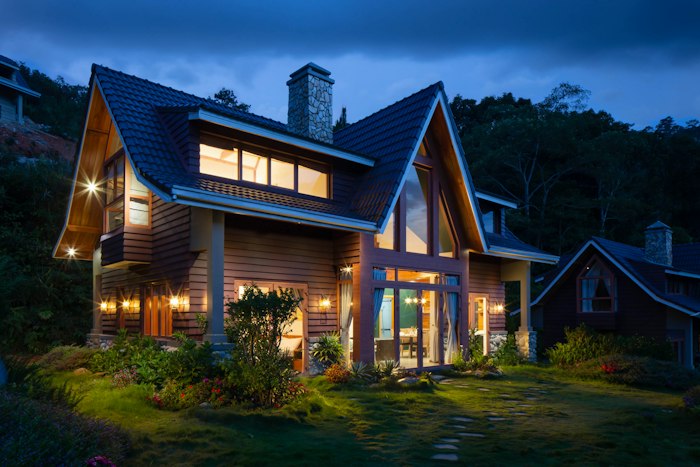
Hancock Park
Median $3,400,000
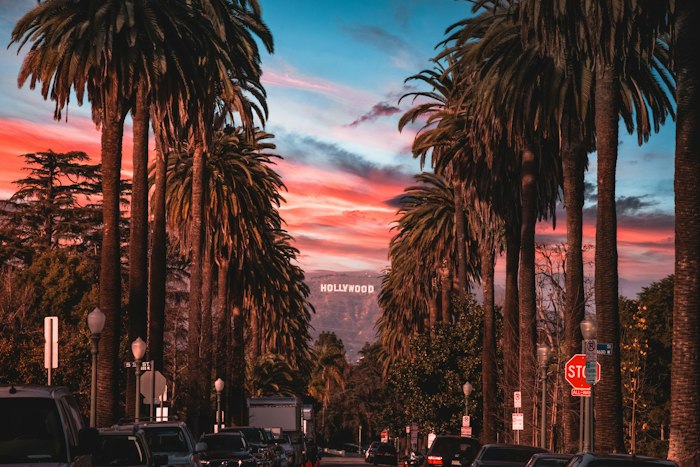
Beverly Hills
Median $5,200,000
Both are prestige addresses. One is preserved 1920s Old LA. The other is the global brand.
Hancock Park and Beverly Hills are the two most architecturally significant 1920s residential districts in Los Angeles, and yet they appeal to dramatically different buyer profiles. Hancock Park sits in central LA, a designated Historic Preservation Overlay Zone (HPOZ) organized around the Wilshire Country Club, with a housing stock dominated by 1920s estate-scale single-family homes on 12,000 to 25,000 square foot lots — Tudor Revival, Spanish Colonial Revival, French Normandy, and Mediterranean estates designed by named period architects (Paul R. Williams, John Byers, Wallace Neff, Roland Coate). Beverly Hills is its own municipal city on the Westside with independent government, separate police force, BHUSD school district, and global brand recognition that translates directly into international buyer demand. The price gap is meaningful — $3.4M median in Hancock Park versus $5.2M in Beverly Hills — but the gap reflects fundamentally different products and different buyer pools. This comparison breaks down what matters for buyers choosing between Old LA architectural heritage and global Westside brand prestige.
Hancock Park is a designated Historic Preservation Overlay Zone (HPOZ) covering roughly 1.4 square miles north of Wilshire Boulevard, bounded by Highland Avenue, Beverly Boulevard, Rossmore Avenue, and Melrose Avenue. The neighborhood was developed in the 1920s by the Hancock family as one of LA's first planned upscale residential districts, organized around the Wilshire Country Club. The housing stock is dominated by 1920s estate-scale single-family homes on 12,000 to 25,000 square foot lots — Tudor Revival, Spanish Colonial Revival, French Normandy, Mediterranean, and Georgian estates designed by named period architects (Paul R. Williams, John Byers, Wallace Neff, Roland Coate). Median sits at $3.4M, days on market 28, YoY appreciation 6.4%. The HPOZ designation means renovation requires careful navigation of historic preservation requirements but also protects against teardown-rebuild cycles that have damaged other LA pre-war neighborhoods. Hancock Park is one of LA's rare neighborhoods where architectural character will still be intact in 30 years. The buyer profile skews multi-generational holders, entertainment industry executives, established professionals at senior career stages, families specifically choosing Hancock Park Elementary, and architecture-focused buyers who want preserved 1920s estate inventory with HPOZ protection.
Beverly Hills is its own city — separate municipality, separate police force, separate school district (BHUSD), separate development politics — and that municipal independence is structurally foundational. The city covers 5.7 square miles. The Flats (south of Sunset, north of Wilshire) is the historic core with original 1920s and 1930s Spanish and Tudor estates on 8,000 to 15,000 square foot lots, median pricing $5M to $12M. North of Sunset trades at $8M to $50M+ for hillside estates with views. BHPO (Beverly Hills Post Office, unincorporated) carries the 90210 zip code at lower price points. Median across the city is $5.2M, days on market 34 — slower than Hancock Park because the buyer pool is smaller and more selective — and YoY appreciation 5.8%. Beverly Hills has the strongest downside resilience anywhere in West LA and the most concentrated global brand recognition. International buyer flow is meaningful (20 to 30% of $5M+ transactions involve foreign capital) and partially decouples demand from U.S. macro conditions. The brand recognition alone justifies a meaningful share of the price gap.
LAUSD schools — Hancock Park Elementary and John Burroughs Middle serve the neighborhood with strong reputations and meaningful family relocation demand. The Mirman School (gifted), Marlborough, Harvard-Westlake (Beverly Glen middle campus), and Wilshire Boulevard Temple Day School are all accessible within 10 to 15 minutes. Hancock Park is one of the few central LA neighborhoods where public school strength is a meaningful pricing factor.
Beverly Hills Unified (BHUSD) is its own district — separate from LAUSD — and consistently ranked among California's top public school systems. Beverly Vista Elementary, Hawthorne, El Rodeo, Horace Mann, and Beverly Hills High School all have strong reputations. The BHUSD premium is a primary driver of Beverly Hills pricing for families with school-age children. Broader district name recognition than Hancock Park Elementary alone.
Wilshire Country Club anchors the social infrastructure (private membership, founded 1919). Larchmont Village (a 10-minute walk from much of Hancock Park) provides walkable retail and dining (the Larchmont Bungalow, Burger Lounge, Larchmont Wine & Cheese, Sunday farmers market). The lifestyle is residential, community-oriented, and discreet — Hancock Park is known for old-LA quiet wealth rather than visible prestige. The HPOZ protection means driving through Hancock Park is visually distinctive in a way most LA neighborhoods are not.
Rodeo Drive is the global retail anchor — Hermès, Chanel, Louis Vuitton, Cartier, and the entire luxury concentration around Two Rodeo. Beverly Wilshire, Beverly Hills Hotel, and Maybourne Beverly Hills anchor hospitality. Dining ranges from old-guard (Spago, The Grill, Polo Lounge) to contemporary (Avra, Cipriani, Wally's). Beverly Gardens Park along Santa Monica Boulevard provides green space. The lifestyle is concierge-level municipal experience with global brand visibility.
Hancock Park's architectural inventory is the most concentrated preserved 1920s estate architecture in central Los Angeles. Tudor Revival, Spanish Colonial Revival, French Normandy, Mediterranean, and Georgian estates designed by named period architects (Paul R. Williams, John Byers, Wallace Neff, Roland Coate). HPOZ designation means renovation requires careful navigation of historic preservation requirements but also protects against teardown-rebuild cycles. Larger lots (12,000 to 25,000 square feet) allow for substantial period-appropriate restoration.
Beverly Hills preserves the largest concentration of original 1920s and 1930s estate architecture on the Westside. The Flats has intact Spanish Colonial Revival, Tudor Revival, Mediterranean, and Georgian estates, many designed by named period architects (Paul Williams, Wallace Neff, John Byers). North of Sunset has hillside contemporaries and Mediterranean estate-scale homes with views. Strict design review and demolition restrictions preserve character but limit modern open-plan adaptations.
Hancock Park's 28-day average days-on-market reflects a smaller more selective luxury buyer pool and longer due diligence cycles typical of $3M+ estate transactions. The market is bifurcated: $2.5M to $5M Hancock Park Elementary-zoned inventory moves at relatively normal velocity (3 to 5 weeks), while $5M+ estate inventory often takes 2 to 6 months. Off-market activity is meaningful — entertainment industry and established professional networks generate significant private transaction flow. HPOZ designation provides downside resilience that pre-war neighborhoods without similar protection do not have.
Beverly Hills's 34-day average days-on-market is the slowest in West LA, reflecting a smaller more selective buyer pool and longer due diligence cycles typical of luxury and ultra-luxury transactions. The market is bifurcated: $3M to $8M Flats inventory moves at relatively normal Westside velocity (3 to 6 weeks), while $10M+ estate inventory often takes 3 to 9 months. International buyer flow is meaningful (20 to 30% of $5M+ transactions involve foreign capital). Off-market activity is unusually significant.
Best fit: Multi-generational holders, entertainment industry executives, established professionals at senior career stages, families prioritizing Hancock Park Elementary, and architecture-focused buyers who specifically want preserved 1920s estate inventory with HPOZ protection. Generally older buyer profile (40+) at senior career or post-career stages. Old-LA cultural orientation rather than Westside brand orientation.
Best fit: Multi-generational holders, international buyers seeking U.S. real estate with global brand recognition, families with school-age children prioritizing BHUSD, and UHNW buyers who want dedicated city services and concierge-level municipal experience. Generally older buyer profile (45+) at senior career or post-career life stage. Westside brand orientation rather than old-LA cultural orientation.
Investment thesis: Hancock Park is a capital preservation play with strong downside resilience anchored by HPOZ designation, Hancock Park Elementary school district, and preserved 1920s estate inventory that does not exist in this concentration anywhere else in central LA. Moderate appreciation (5 to 7% band) but exceptional volatility resistance. Beverly Hills is a prestige capital preservation play with the strongest downside resilience on the Westside (5 to 7% band), BHUSD school district premium, dedicated municipal services, and international buyer flow that partially decouples demand from macro conditions. For architecture-focused buyers, families prioritizing Hancock Park Elementary, and Old-LA cultural orientation, Hancock Park delivers superior dollar-for-dollar value. For UHNW capital preservation, global brand prestige, and BHUSD-anchored families, Beverly Hills justifies the $1.8M premium.
Hancock Park wins on architectural prestige, HPOZ preservation protection, entry price, and Old LA cultural orientation. Beverly Hills wins on global brand recognition, BHUSD school district, dedicated municipal services, international buyer flow, and Westside location. The two markets serve fundamentally different buyer profiles — the Hancock Park buyer prioritizes architectural heritage and Old LA culture, the Beverly Hills buyer prioritizes global brand and concierge-level municipal experience. Both are excellent generational holds. If you want preserved 1920s estate architecture with HPOZ protection and Hancock Park Elementary, Hancock Park. If you want global brand prestige, BHUSD schools, and dedicated city services, Beverly Hills.
"These two neighborhoods are not interchangeable, and the buyers who choose between them often have very different cultural orientations. Hancock Park is Old LA — quiet wealth, architectural heritage, the Wilshire Country Club, families that have been there for generations. Beverly Hills is the global brand — the name carries international weight, the dedicated city services are real, the BHUSD school premium is structurally embedded. The HPOZ designation in Hancock Park is more important than most buyers realize — it has prevented teardown-rebuild damage that has changed Beverly Grove, parts of Beverly Hills proper, and almost everywhere in West LA. If architectural preservation matters to you, Hancock Park is structurally better protected. If global brand matters more, Beverly Hills. I have closed in both this year. Be honest about which cultural orientation fits you — that question usually answers the rest."
Talk to Anthony — Free →Beverly Hills is significantly more expensive, with a median of $5.2M compared to Hancock Park at $3.4M — a $1.8M gap. The premium reflects BHUSD school district, global brand recognition, dedicated municipal services, and larger UHNW buyer pool.
Beverly Hills, on broader district strength. BHUSD is its own district and ranks among California's top public school systems. Hancock Park Elementary (LAUSD) is also excellent but as a single school rather than full district. Both work for families prioritizing public schools — the choice depends on whether you want district-wide strength (Beverly Hills) or a strong specific elementary plus private alternatives nearby (Hancock Park).
Hancock Park appreciates slightly faster at 6.4% YoY versus Beverly Hills at 5.8%. Both are moderate-appreciation established markets prioritizing capital preservation over growth. Neither competes with faster-appreciating markets like Culver City (11.2%) or West Adams (13.6%) for buyers prioritizing growth.
HPOZ stands for Historic Preservation Overlay Zone. Hancock Park's HPOZ designation means renovation, demolition, and new construction require approval from the HPOZ board and must conform to historic preservation guidelines. This protects the neighborhood's 1920s architectural character but adds complexity to renovation projects. Beverly Hills has its own design review requirements but is not HPOZ-designated.
Beverly Hills, by a wide margin. International buyers seeking U.S. real estate often specifically target Beverly Hills for the global name value, dedicated city services, and prestige association. Hancock Park draws international buyers but at meaningfully smaller volume — it is primarily a domestic buyer market.
Hancock Park averages 28 days, Beverly Hills averages 34 days. Beverly Hills's slower pace is the smaller and more selective luxury buyer pool plus longer due diligence cycles in $5M+ transactions. Hancock Park is also slow but slightly less so — its luxury market is more domestic and faster-moving than Beverly Hills's international-influenced market.
Both work, but the cultural orientation differs. Hancock Park has long been an entertainment industry favorite for buyers who prefer Old LA discretion — quiet wealth, architectural heritage, no Rodeo Drive visibility. Beverly Hills attracts entertainment industry buyers who want global brand visibility and concierge-level services. Many established entertainment industry households consider both — the choice typically reflects personal cultural orientation.
Both are excellent generational holds with different strengths. Hancock Park offers HPOZ architectural protection that ensures the neighborhood character will still be intact in 30+ years — meaningful for buyers who care about visual continuity through generations. Beverly Hills offers BHUSD school district stability, dedicated municipal services, and global brand value that has endured for a century. For preserved architectural heritage, Hancock Park. For brand-anchored municipal stability, Beverly Hills.
Hancock Park and Beverly Hills are both prestige addresses, but they serve fundamentally different buyer profiles. Hancock Park delivers HPOZ-protected 1920s estate architecture, Hancock Park Elementary, Old LA cultural orientation, and architectural depth at $3.4M median. Beverly Hills delivers global brand recognition, BHUSD school district, dedicated municipal services, and the strongest downside resilience on the Westside at $5.2M median. The right answer depends on whether you want preserved Old LA heritage with architectural protection (Hancock Park) or global Westside brand with concierge-level municipal services (Beverly Hills). Before committing on either, walk specific streets in both with someone who has closed in both markets. Reach out for a free CMA and strategy conversation.