West LA Real Estate
Santa Monica
Santa Monica commands a beach premium that never softens. Ocean access, walkable lifestyle, and strong tech and entertainment buyer demand keep this market consistently competitive.
Santa Monica is one of the most walkable coastal cities in the United States, and its real estate market reflects that premium. The median single-family home price exceeds $2.8 million in 2026, with the neighborhood north of Montana Avenue — known as NoMo — regularly producing sales above $5 million. Santa Monica's strict zoning has kept housing density low, which means supply will always lag behind demand.
The Santa Monica-Malibu Unified School District is among the top 10% in California, with Santa Monica High School sending graduates to the nation's most selective universities. This school premium is estimated to add 8-15% to property values compared to similar homes outside the district boundaries. For families, this is one of the most important factors in the purchase decision.
Santa Monica has some of the toughest rent control laws in California, a critical factor for investors. Buildings constructed before 1979 are subject to strict rent stabilization that limits annual increases. Buyers of rental properties must understand these rules before purchasing. The upside: when units turn over, rents can be reset to market rate — and Santa Monica market rents are among the highest in the region.
Understanding Santa Monica's micro-markets is essential for both buyers and sellers. The three-block radius around Montana Avenue in the north commands prices 20-30% above equivalent properties south of Wilshire. Properties west of Lincoln Boulevard carry a beach proximity premium that evaporates quickly as you move east. The difference between being inside and outside the Santa Monica-Malibu Unified School District boundaries can be worth $150,000 to $250,000 on a comparable property. These hyperlocal price dynamics require an agent who has studied the market at the street level. Anthony Galeano tracks Santa Monica sales data continuously and can tell you precisely what drove the price on any recent comparable — information that makes the difference between winning a negotiation and losing one.
The process of buying in Santa Monica requires strategic preparation that most buyers underestimate. The demand is so consistent and the inventory so limited that hesitation is the most expensive mistake a buyer can make. Buyers need to be pre-approved with a letter that reflects current rates and the specific price range they are targeting before seeing their first property. They also need a clear position on contingencies — in the most competitive segments of the Santa Monica market, the standard 17-day inspection contingency period is sometimes waived entirely by competing buyers. Anthony Galeano helps buyers develop a strategy that is competitive without being reckless, protecting their interests while positioning them to win.
Santa Monica commercial real estate and the overall economic ecosystem of the city create a self-reinforcing demand loop for residential property. Major employers including the Santa Monica airport redevelopment project, Hulu, Lionsgate, and dozens of tech startups concentrated along Colorado Avenue generate constant demand from well-paid employees who want to live close to work. The city deliberate policy of limiting new residential construction while growing its commercial base means this employment-driven demand will continue to outpace housing supply for the foreseeable future, sustaining price appreciation.
Santa Monica has consistently demonstrated that coastal access combined with a strong institutional base — the schools, the city government quality, and the commercial ecosystem of the Third Street Promenade — creates a real estate market that recovers faster and appreciates more reliably than virtually any other submarket in Los Angeles. Buyers who waited for Santa Monica prices to correct after every market cycle in the past 30 years waited in vain. The structural supply constraint created by the city geography, combined with the permanent demand from employers and the continued attraction of the coastal lifestyle, makes Santa Monica one of the most defensible long-term real estate investments available anywhere in Southern California.
Anthony Galeano serves buyers and sellers throughout Santa Monica with bilingual service in English and Spanish. Free property valuations, market reports, and buyer consultations are available at no cost or obligation. Contact Anthony at (310) 437-3343 or visit anthonygaleano.com to get started.
"ADU opportunities are significant in Santa Monica. Correctly permitted ADUs are adding 15-25% to property values."
3rd Street Promenade, beach bike path, Main Street, world-class restaurants
The combination of world-class schools, ocean access, walkable amenities, and strict zoning protecting neighborhood character makes Santa Monica one of the most durable real estate markets in the country. Properties here have consistently appreciated and maintained value across multiple market cycles.
Santa Monica has one of the highest concentrations of cash buyers in Los Angeles, particularly above $2 million. Approximately 28% of transactions close without financing, which means faster closings and fewer fall-throughs. Anthony's network includes buyers actively searching for Santa Monica properties before they hit the MLS.
Anthony has 20+ years of West LA experience and direct relationships across every Santa Monica neighborhood. Get his personal read on the market — no obligation, no pressure.
Santa Monica was incorporated in 1886 as one of the original coastal cities of Los Angeles County. The city developed initially as a resort destination — the Santa Monica Pier (original construction 1909) and the Hotel Casa del Mar (1926) anchored an early tourism economy. Through the 1920s and 1930s, Santa Monica grew as a wealthy residential suburb with a strong creative class — many Hollywood writers and producers maintained Santa Monica homes alongside their primary studio-area residences.
The post-war period (1945-1970) saw rapid suburbanization with the construction of mid-century single-family inventory across the Sunset Park, Ocean Park, and Wilshire-Montana corridors. The Aerospace Corporation (founded 1960) and Rand Corporation (founded 1948 in Santa Monica) anchored a technical employment base that complemented the creative class.
Santa Monica's most consequential modern development was the establishment of SMMUSD (Santa Monica-Malibu Unified School District) as an independent district separate from LAUSD. This independence — combined with strong municipal governance, ocean proximity, and the cultural energy of the Third Street Promenade redevelopment in the 1990s — established Santa Monica as one of the most desirable family-oriented coastal cities in California.
The tech boom of the 2010s brought Snapchat (founded 2011, headquartered in Venice but with significant Santa Monica presence), Hulu, Riot Games, and others into the local employment base. The "Silicon Beach" identity formed during this period centers on Santa Monica's downtown and the adjacent Venice/Playa Vista corridor.
Current Santa Monica is a mature, established premium-market city — independent municipality, strong school district, established creative and tech employer base, and one of the most consistent capital preservation markets in California. Appreciation is moderate (6.9% YoY) but downside resilience is exceptional.
Santa Monica covers approximately 8 square miles and breaks into distinct submarkets with significantly different price points, architectural character, and buyer profiles. The geographic terrain is largely flat from the bluffs at Palisades Park down to the southern edge near Marine Avenue.
North of Montana: The premier single-family district north of Montana Avenue and south of the Pacific Palisades border. Large-lot Spanish Colonial, Tudor Revival, and Cape Cod estates on tree-lined streets. Median $5M to $15M+. Strong family demographic. Walking distance to Montana Avenue retail. The most expensive Santa Monica submarket.
Wilshire-Montana corridor: Between Montana Avenue and Wilshire Boulevard. Dense mix of mid-century condominium buildings (some architecturally significant), single-family on smaller lots, and post-war duplexes. Strong walkability. Condos range $700K to $3M+; single-family $2.5M to $6M.
Sunset Park: South of Wilshire Boulevard, east of Lincoln Boulevard. Preserved California Craftsman bungalows on walkable tree-lined streets. Strong family demographic with SMMUSD school assignment. Median single-family $1.9M to $3.5M. One of the most architecturally consistent Santa Monica submarkets.
Ocean Park: South of Pico Boulevard, near the beach. Preserved Craftsman bungalows mixed with newer construction and small-lot single-family. Beach proximity within walking distance. Median $1.8M to $3.5M for single-family. Strong dual-professional buyer demographic.
Downtown Santa Monica: The Third Street Promenade and adjacent commercial core. Mostly condominium inventory above retail and office. Median condo $900K to $4M depending on building and view. Strong walkability but density may not suit all buyers.
Pico district: South of Pico Boulevard, east of Lincoln. Older multi-family inventory mixed with single-family. More accessible entry pricing ($1.4M to $2.2M for single-family). Some sections of the Pico district have undergone significant revitalization; others remain transitional. Local expertise on specific blocks matters.
Mid-City Santa Monica (north of Pico, east of Centinela): Small-lot single-family and duplex inventory. Median $1.6M to $2.6M. Less distinctive character than other submarkets but solid SMMUSD school assignment.
Santa Monica-Malibu Unified School District (SMMUSD) is the single most important factor driving Santa Monica residential property values. Like Culver City Unified, SMMUSD is its own district separate from LAUSD — with its own school board, superintendent, budget, and educational philosophy. The district serves approximately 10,000 students across 11 schools.
Elementary schools: Roosevelt Elementary (GreatSchools 7-8), McKinley Elementary (8-9), Will Rogers Elementary (9-10, generally considered the strongest), Edison Language Academy (8-9, Spanish dual-immersion), Grant Elementary (7-8), Franklin Elementary (8-9), and Point Dume Marine Science School (in Malibu, technically part of SMMUSD). Will Rogers and Edison are particularly competitive — families specifically target homes within their attendance boundaries.
Middle schools: Lincoln Middle School (7-8) and John Adams Middle School (7-8). Both have strong reputations.
Santa Monica High School (Samohi) (GreatSchools 7-8): The single comprehensive high school for the district. Strong college placement, UCs and selective private universities accept significant numbers of Samohi graduates. Strong arts and athletics programs.
The SMMUSD premium: Being inside SMMUSD boundaries adds an estimated 10 to 15 percent to property values compared to similar homes just outside the district lines. The boundary line at Centinela Avenue is particularly significant — homes on the Santa Monica side of Centinela trade at meaningful premiums to nearly identical homes on the West LA side.
Boundary verification: SMMUSD boundaries occasionally shift, and some Santa Monica addresses are at the edge of attendance zones for specific elementary schools. Families targeting a specific elementary (Will Rogers, Edison, McKinley) should verify the exact attendance assignment with SMMUSD before close. Open enrollment programs allow some flexibility but with limited capacity.
Private alternatives: Crossroads School for Arts & Sciences (K-12, Santa Monica, highly regarded), New Roads School (K-12, Santa Monica), Wildwood School (K-12, West LA, draws Santa Monica families), and Pacifica Christian (K-12). Many Santa Monica families consider both SMMUSD and private alternatives — the private options are strong enough that some families choose them even when in SMMUSD boundaries.
Santa Monica's lifestyle is anchored by ocean proximity, walkable village density, and the SMMUSD school orbit for families. Daily life patterns differ significantly between submarkets but share these common elements.
Ocean proximity: Santa Monica is the only West LA city with direct beach access for a significant portion of its residential population. Ocean Park and parts of Sunset Park residents can walk to the beach in 10 to 20 minutes. North of Montana residents drive 5 to 8 minutes to the beach. The beach is fundamental to Santa Monica's daily lifestyle in a way that no inland West LA neighborhood can replicate.
Third Street Promenade and downtown Santa Monica: The pedestrian-only outdoor shopping district that anchors downtown commercial life. Movie theaters, restaurants, retail. Strong evening and weekend activity. Some retail evolution has reduced the Promenade's peak draw, but it remains a meaningful local amenity.
Montana Avenue: The premier boutique retail corridor north of Wilshire. Small-format independent retail, dining, and services. Strong daily foot traffic from North of Montana residents. Notable establishments: Sweet Lady Jane, Rustic Canyon (one of the most awarded restaurants on the Westside), Wally's Wine, Caffe Luxxe.
Main Street (Ocean Park): The casual dining and design district anchoring Ocean Park. Strong weekend brunch culture. Restaurants include Cafe Bolivar, Library Alehouse, and the Albright. Surf-related retail and the Edgemar Center for the Arts.
Palisades Park: The bluff-top park along Ocean Avenue with views of the Pacific. Among Santa Monica's most distinctive walkable amenities. Strong daily walking and exercise culture.
Farmers markets: Three major weekly markets — Wednesday Downtown Farmers Market (one of the largest and most respected farmers markets in California, drawing chefs from across LA), Saturday Downtown Farmers Market, and Sunday Main Street Farmers Market. The Wednesday market in particular is a meaningful weekly social and culinary event.
Restaurants beyond the major districts: Mélisse (Chef Josiah Citrin, tasting menu, one of the most awarded restaurants in California), Cassia (Bryant Ng), Father's Office (the original Sang Yoon location), Sushi Sushi, Hatchet Hall, Tar & Roses. Santa Monica has one of the deepest restaurant scenes on the Westside.
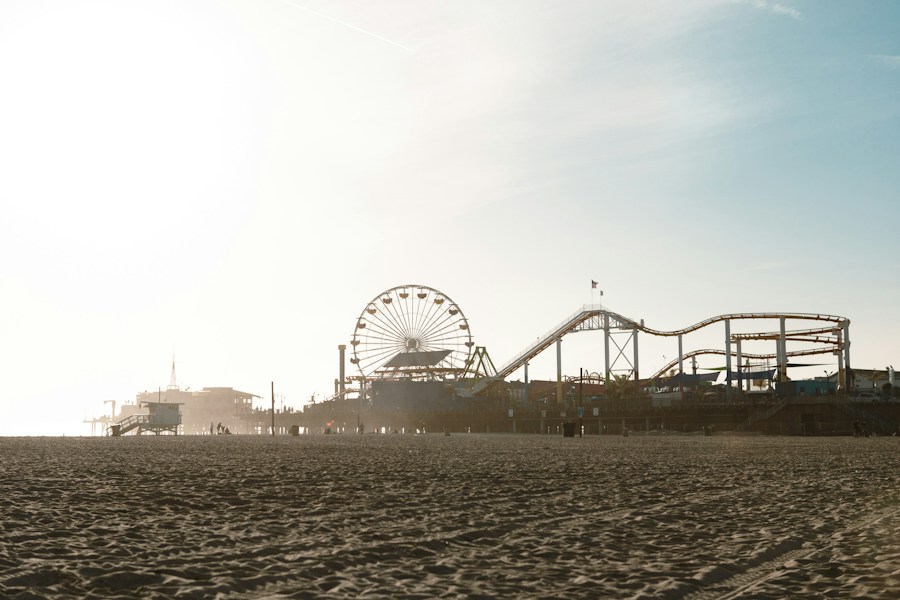
Cultural infrastructure: The Santa Monica Pier (historic 1909 pier with the original Santa Monica Pier Aquarium), the Annenberg Community Beach House, the Santa Monica College (which operates a significant performing arts program), and the Bergamot Station Arts Center anchor the cultural scene.
Outdoor activities: Beach volleyball is a foundational Santa Monica activity. The Marvin Braude Bike Trail runs the full length of the city along the beach. Surfing, paddleboarding, and water-direct exercise are part of daily life for many residents.
Santa Monica is one of the most consistently strong real estate markets in California, characterized by moderate appreciation, exceptional downside resilience, and structural buyer pool depth.
Why Santa Monica holds value through downturns: Three structural factors create exceptional downside resilience. First, SMMUSD school district premium — families with school-age children create a constant demand floor regardless of broader market conditions. Second, beach proximity is genuinely irreplaceable — no inland West LA market can replicate it, so buyers prioritizing the coast have limited substitutes. Third, established municipal infrastructure (independent police, fire, schools) provides daily-life stability that less-established markets cannot match.
Days on market by submarket:
North of Montana single-family: 25 to 40 days for larger estates ($5M+); 14 to 21 days for $3M to $5M inventory.
Sunset Park and Ocean Park single-family: 14 to 21 days for well-priced inventory.
Wilshire-Montana corridor condos: Variable — strong buildings (Wilshire House, the Carlyle) move in 14 to 28 days; older buildings with weaker HOAs slower.
Downtown condos: 21 to 35 days typical.
Pico district single-family: 21 to 35 days, more variable.
Offer dynamics: Multi-offer situations are the default for well-priced Santa Monica inventory. North of Montana inventory typically sees 4 to 8 competing offers with 3 to 7% above-asking outcomes. Sunset Park and Ocean Park inventory sees 6 to 10 offers with 5 to 10% above-asking common. Wilshire-Montana condo activity depends on building.
Seasonal patterns: Spring through early summer (March through June) sees the strongest competition timed to the SMMUSD school calendar. Families want to be settled before the August school year begins. November through January offers better buyer-side leverage.
Off-market activity: Meaningful in the $3M+ tier. SMMUSD parent networks, established Santa Monica family connections, and creative-industry networks all generate significant off-market matching. Estimated 15 to 20% of Santa Monica $3M+ transactions involve some off-market or pre-market component.
Forward returns outlook: Santa Monica's 6 to 8% historical appreciation band is likely to continue. Faster appreciation is found in Culver City (11.2%), West Adams (13.6%), and other earlier-cycle markets. Santa Monica's value proposition is not maximum appreciation — it is exceptional downside resilience plus established lifestyle. For capital preservation and multi-decade family holds, Santa Monica is one of the strongest positions in California real estate.
Rent control and tenant law considerations: Santa Monica has one of the strongest rent control regimes in California for pre-1979 multi-family buildings (Costa-Hawkins exemptions apply to single-family but specific transition rules matter). Investors purchasing multi-family inventory need to verify tenant law status carefully. Single-family is generally exempt from rent control but tenant law still requires careful navigation.
Santa Monica's architectural inventory spans nearly 140 years of California residential development. The diversity is one of the city's defining characteristics — buyers can find virtually every major California residential architectural style within Santa Monica.
Victorian era (1880s-1900s): Small but present concentration in the older sections near downtown and Ocean Park. Some preserved Queen Anne and Eastlake examples. Most have been converted or significantly altered.
California Craftsman (1900s-1930s): Strong concentration in Sunset Park, Ocean Park, and parts of the Pico district. Original Greene & Greene-adjacent work alongside more modest Craftsman bungalows. Sunset Park in particular has tree-lined streets of preserved 1920s Craftsman that rival West Adams in density (though typically smaller lots).
Spanish Colonial Revival (1920s): North of Montana has significant Spanish Colonial concentration alongside Tudor Revival. Many were designed by named architects of the period (Wallace Neff, Paul R. Williams, John Byers).
Tudor Revival (1920s-1930s): Concentrated in North of Montana. Steep gabled roofs, half-timbering, decorative chimneys. Many preserved.
Cape Cod and Colonial Revival (1930s-1950s): Strong concentration in North of Montana and the older sections of Sunset Park. Shingle-style and clapboard siding, traditional pitched roofs.
Mid-century single-family and ranch (1940s-1970s): Strong volume across multiple submarkets. Post-war modernist single-family by named architects (Richard Neutra has work in Santa Monica) alongside more typical post-war ranch and small-lot single-family.
Mid-century apartment buildings (1950s-1970s): The Wilshire-Montana corridor has dense concentration of architecturally significant mid-century apartment buildings, some by named architects. Edward Killingsworth's work is present.
Contemporary single-family rebuilds (2000s-present): Significant volume across all submarkets. Many original Craftsman or mid-century lots have been rebuilt with contemporary architecture. Quality varies — some thoughtful and architecturally significant; others more rushed flips.
Architectural preservation considerations: Santa Monica has the Landmarks Commission which designates Architectural Landmarks and Historic Districts. The Third Street Historic District, the Wilshire-Montana Historic District, and portions of Ocean Park have designations. Buyers considering historic property should verify designation status and renovation requirements.
Santa Monica off-market activity is meaningful and concentrated through specific networks that buyers should understand.
SMMUSD parent networks: The largest off-market source. When a Santa Monica family is preparing to move (often timing the move to a school year transition), their home often becomes known to other SMMUSD parents 3 to 9 months before public listing. SMMUSD parent networks operate through schools, sports programs (AYSO soccer, beach volleyball, swimming), and PTA connections.
Creative industry and entertainment networks: Many Santa Monica residents work in the entertainment industry. When industry families are relocating internally or to different cities, their homes often surface through industry networks. Studio executives, agents, and creative-class professionals share housing intel within professional circles.
Long-term Santa Monica family connections: Multi-generational Santa Monica families maintain strong connections across the city. When older residents are downsizing or trust-related sales occur, the transactions often start with off-market positioning to test pricing and find buyers within the network before public listing.
Investment groups: Several real estate investment groups specifically target Santa Monica single-family and duplex inventory. These investors operate through agent relationships and frequently see off-market inventory before public listing.
Estate and trust sales: Multi-generational families occasionally bring properties to market through estate or trust sales. These transactions sometimes start with off-market positioning, particularly for properties that may need significant renovation or carry complex tenant law histories.
Accessing off-market inventory: Working with an agent who has active relationships in Santa Monica is essential. Anthony Galeano has closed transactions across all Santa Monica submarkets and maintains active relationships with SMMUSD parent networks, creative industry connections, and the investment groups operating in the city. Roughly 20% of his Santa Monica transactions are sourced off-market.
Mistake 1: Buying outside SMMUSD without realizing it. Centinela Avenue is the eastern boundary of SMMUSD. Properties on the West LA side of Centinela are not in SMMUSD. The boundary line affects property values significantly — buyers should always verify school district assignment before close.
Mistake 2: Underestimating the school attendance boundary specificity within SMMUSD. Will Rogers Elementary, Edison Language Academy, and certain other schools have specific attendance boundaries that do not match census tract or zip code boundaries. Families targeting a specific school need to verify exact attendance assignment, not rely on general "SMMUSD" status.
Mistake 3: Buying for beach proximity without verifying actual walking distance. "Walking distance to the beach" can mean anything from 5 minutes to 30 minutes depending on the specific Santa Monica submarket. Buyers prioritizing daily beach access should verify the actual walking time from the property to the beach access point.
Mistake 4: Overpaying for downtown condos. Downtown Santa Monica condos can be excellent properties, but the market is more volatile than the established single-family submarkets. During peak cycles, buyers can overpay by 5 to 10%. Single-family in Sunset Park, Ocean Park, and North of Montana has held value more consistently across cycles.
Mistake 5: Ignoring HOA structure on Wilshire-Montana condos. Wilshire-Montana condo HOAs range from $500/month to $2,500/month depending on building amenities. The HOA structure significantly affects total monthly cost and resale. Buyers should compare HOA reserves, special assessment history, and amenity quality across buildings.
Mistake 6: Underestimating tenant law and rent control complexity. Investors purchasing multi-family inventory or properties with tenants in place need to verify tenant law status carefully. Santa Monica's rent control regime is strong for pre-1979 multi-family. Single-family with long-term tenants requires careful navigation.
Mistake 7: Treating Santa Monica as interchangeable with Venice or Pacific Palisades. The buyer profiles and lifestyle are different. Santa Monica is established municipal city with family infrastructure. Venice is creative-class coastal village. Pacific Palisades is small-town family village. Buyers who blur these markets often regret their final choice — be specific about what you actually want.
Yes, at moderate rates. Current 6.9% YoY appreciation is consistent with Santa Monica's historical 6 to 8% band. Faster appreciation is available in earlier-cycle markets (Culver City 11.2%, West Adams 13.6%), but Santa Monica's value proposition is downside resilience plus established lifestyle, not maximum appreciation.
Depends on school preference and budget. Will Rogers Elementary attendance area is consistently strong — typically in parts of Sunset Park and the Pico district edge. North of Montana for higher-budget families with broader school flexibility. Ocean Park for families wanting beach proximity. Wilshire-Montana for families wanting walkable density with school access. SMMUSD spans the entire city so most submarkets work for families.
Yes. The Santa Monica Expo Line terminus (Downtown Santa Monica station) provides direct rail access to Downtown LA in approximately 45 to 50 minutes. The Big Blue Bus serves the city extensively. Many Santa Monica residents specifically chose the city for Metro accessibility.
For capital preservation, yes — Santa Monica is one of the strongest downside-resilience markets in California. For maximum appreciation, no — Culver City and earlier-cycle markets deliver faster growth. For family hold (10 to 20 years), Santa Monica is exceptional because of SMMUSD, beach proximity, and established municipal infrastructure. For yield, moderate — rental income is strong but rent control affects multi-family investments.
Santa Monica has strong rent control for pre-1979 multi-family buildings. Single-family is generally exempt under Costa-Hawkins. Investors purchasing multi-family inventory need to verify tenant law status, allowable rent increases, and eviction restrictions carefully. The rent control regime materially affects multi-family underwriting and is one of the more complex tenant-law environments in California.
Highly likely. SMMUSD is structurally independent of LAUSD with its own governance, budget, and educational philosophy. The district has maintained strong rankings across multiple decades. Demographic and family relocation patterns support continued demand. The school district premium has been consistent across multiple real estate cycles.
The Pico district has some blocks that have not fully revitalized — buyers should walk specific streets with local expertise before committing. The far southern edge near Marine Avenue has older multi-family inventory that may not appreciate as strongly. Generally, the major submarkets (North of Montana, Sunset Park, Ocean Park, Wilshire-Montana corridor, downtown) all have strong fundamentals.
Both are independent coastal cities with strong school districts (SMMUSD and MBUSD respectively). Santa Monica has more cultural depth, deeper restaurant scene, broader employer base, and more diverse architectural inventory. Manhattan Beach has tighter community fabric, more flat-lot beach city character, and direct LAX proximity. Both are excellent family markets. Choice depends on geographic preference (Westside vs South Bay) and lifestyle preference (cultural density vs beach city village).
Side-by-side breakdowns of Santa Monica against other West LA markets — pricing, schools, lifestyle, appreciation, and Anthony's investment thesis for each pairing.
The median home price in Santa Monica is $2,800,000 in 2026. Ocean-view properties and homes north of Montana Avenue can range from $4M to $12M. Condominiums start around $900,000.
Santa Monica is one of the most stable luxury real estate markets in California. With a permanent coastal boundary limiting new development, prices have appreciated consistently for decades. The tech and entertainment economy keeps buyer demand strong year-round.
North of Montana is the most prestigious residential area with large lots and top schools. Ocean Park offers a more bohemian character close to the beach. Sunset Park provides more affordable entry points while still within Santa Monica Unified School District.