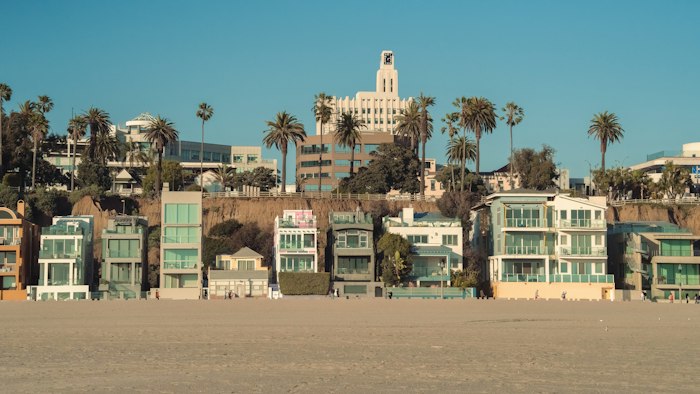
Santa Monica
Median $2,800,000
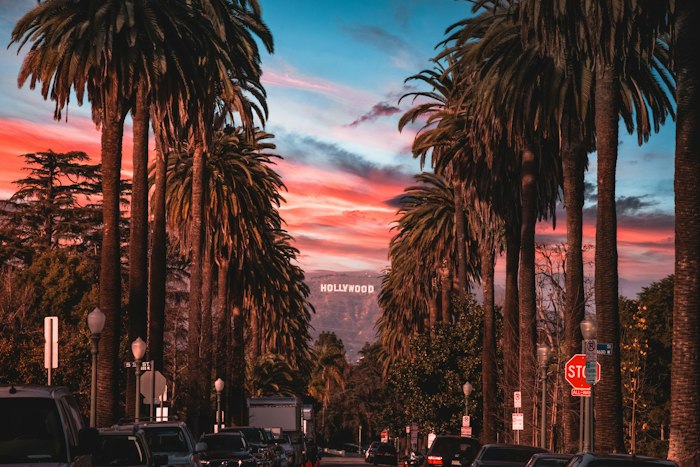
Beverly Hills
Median $5,200,000
Two of the most recognized Westside addresses — but they serve fundamentally different buyers.
Santa Monica and Beverly Hills are the two most internationally recognized residential addresses in West Los Angeles, and clients who can buy in either spend a remarkable amount of time deciding between them. The price gap is substantial — $2.8M median in Santa Monica versus $5.2M in Beverly Hills — but the gap is only one dimension of the decision. Both cities are independent municipalities with their own school districts, their own police forces, and their own development politics. Both have brand recognition that survives every market cycle. Both attract international buyer flow. The honest difference is the lifestyle: Santa Monica is coastal city living anchored around the beach, the downtown, and the SMMUSD school district that drives most family demand. Beverly Hills is prestige and concierge-level municipal experience, with a global retail concentration and a buyer pool weighted toward UHNW capital and multi-generational holds. This comparison breaks down median price, days on market, appreciation, schools, lifestyle, buyer profile, architectural typology, and the strategic case for each. By the end you should know which city actually fits your daily life — not just which one carries the bigger price tag.
Santa Monica is its own city — separate municipality, separate school district, separate development politics — and that municipal independence is structurally the most important fact about it. The city covers roughly 8 square miles from Montana Avenue down to Ocean Park, from the beach east to Centinela. SMMUSD (Santa Monica-Malibu Unified School District) is the dominant pricing variable, consistently ranked among California's strongest public school systems and the primary driver of family relocation demand. Housing breaks across multiple submarkets: North of Montana has $3M to $15M+ Spanish and Cape Cod estates on tree-lined streets; Wilshire-Montana is mid-century condo dense; Sunset Park and Ocean Park have preserved California Craftsman bungalows on walkable streets; the Pico district has multi-family inventory at investor prices. Median sits at $2.8M, days on market average 21, and YoY appreciation is 6.9%. The trade-off Santa Monica buyers explicitly make is moderate appreciation in exchange for exceptional downside resilience — the city holds value through corrections better than nearly anywhere in California outside Beverly Hills. Buyers are often dual-professional households at senior career stages, often with school-age children, choosing Santa Monica specifically for SMMUSD and the beach proximity that no other Westside neighborhood offers.
Beverly Hills is also its own city — but the resemblance to Santa Monica ends there. Where Santa Monica is coastal city living, Beverly Hills is concierge-level municipal experience: highest officer-to-resident police ratio in California, dedicated municipal services, BHUSD (Beverly Hills Unified School District) consistently ranked among the Westside's strongest public systems, and a global brand recognition that translates directly into international buyer demand. The city covers roughly 5.7 square miles and breaks into distinct submarkets. The Flats (south of Sunset, north of Wilshire) is the historic core — flat tree-lined streets, original 1920s and 1930s Spanish and Tudor estates, median pricing in the $5M to $12M band. North of Sunset trades at $8M to $50M+ for hillside estates with views. BHPO (Beverly Hills Post Office) carries the 90210 zip code at meaningfully lower price points. Median across the city is $5.2M, days on market average 34 — slower than Santa Monica because the luxury buyer pool is smaller and more selective — and YoY appreciation is 5.8%, moderate but with the strongest downside resilience anywhere in West LA. Beverly Hills attracts multi-generational holders, international buyers seeking U.S. real estate with global brand recognition, families with school-age children prioritizing BHUSD, and UHNW buyers who specifically want dedicated city services.
Santa Monica-Malibu Unified School District (SMMUSD) is the dominant pricing factor. Roosevelt Elementary, McKinley, Will Rogers, Lincoln Middle School, and Samohi (Santa Monica High School) all have strong reputations and drive significant family relocation demand. Strong private alternatives nearby including Crossroads, New Roads, and Wildwood. The SMMUSD premium alone justifies a meaningful portion of Santa Monica's pricing relative to surrounding non-municipal neighborhoods.
Beverly Hills Unified School District (BHUSD) is similarly the dominant pricing factor for Beverly Hills proper. Beverly Vista Elementary, Hawthorne, El Rodeo, Horace Mann, and Beverly Hills High School all have strong reputations. Strong private alternatives including Harvard-Westlake Middle School (Beverly Glen campus), Marlborough, Buckley, and Curtis School. BHUSD vs SMMUSD is a closer comparison than most realize — both are top-tier public systems, and the specific elementary school boundary matters more than the district name.
Third Street Promenade and the Santa Monica Pier anchor the public space; Montana Avenue holds the boutique retail concentration; Main Street has the casual dining and design district; Palisades Park along the bluffs gives Santa Monica its most distinctive walkable amenity. Restaurants range from old-guard institutions (Father's Office, Rustic Canyon) to high-end (Cassia, Mélisse). Wednesday and Saturday farmers markets are the strongest on the Westside. Beach access is direct — no other Westside city offers this.
Rodeo Drive is the global retail anchor — Hermès, Chanel, Louis Vuitton, Cartier, and the entire luxury concentration around Two Rodeo. Beverly Wilshire, Beverly Hills Hotel, and Maybourne Beverly Hills anchor the hospitality scene. Dining ranges from old-guard (Spago, The Grill, Polo Lounge) to contemporary (Avra, Cipriani, Wally's). Beverly Gardens Park provides green space. Closest public beach is roughly 6 to 8 miles via Santa Monica Boulevard or Sunset — meaningful for the buyer who cares.
Santa Monica's housing stock spans nearly a century of California residential design. North of Montana has $5M+ Spanish, Tudor, and Cape Cod estates on large flat lots, many original to the 1920s and 1930s. The Wilshire-Montana corridor is dominated by mid-century condo buildings, some architecturally significant (the Embassy and Champagne Towers among them). Sunset Park and Ocean Park have preserved California Craftsman bungalows. The Pico district has older multi-family stock at investor pricing. This range means buyers can enter Santa Monica anywhere from $900K (older condos) to $20M+ (oceanfront estates) and remain within SMMUSD school boundaries.
Beverly Hills preserves the largest concentration of original 1920s and 1930s estate architecture on the Westside. The Flats has intact Spanish Colonial Revival, Tudor Revival, Mediterranean, and Georgian estates, many designed by named period architects (Paul Williams, Wallace Neff, John Byers). North of Sunset has hillside contemporaries and Mediterranean estate-scale homes with views. The city has strict design review and demolition restrictions — preserves character but limits the buyer who wants modern open-plan layouts in original housing stock. New construction is uncommon and tightly regulated.
Santa Monica's 21-day average days-on-market reflects selective buyers and diverse inventory. SMMUSD families dominate the single-family market and often take longer in due diligence because they intend to hold for 10 to 15 years through their children's school years. Inventory is most plentiful in spring; competition is most intense in zones with strong walk-to-school ratings. Condo inventory along the Wilshire corridor moves at varying speeds depending on building reputation, view, and HOA fee profile. Sunset Park and Ocean Park craftsman inventory often sees 5 to 10 competing offers on well-priced homes. Off-market activity is meaningful in the $3M to $8M tier.
Beverly Hills's 34-day average days-on-market is the slowest in West LA, reflecting a smaller more selective buyer pool and longer due diligence cycles typical of luxury transactions. The market is bifurcated: $3M to $8M Flats inventory moves at relatively normal Westside velocity (3 to 6 weeks), while $10M+ estate inventory often takes 3 to 9 months. International buyer flow is meaningful (estimated 20 to 30% of $5M+ transactions involve foreign capital) and creates demand partially decoupled from U.S. macro conditions. Off-market activity is unusually significant — a substantial share of $10M+ transactions never appear in the MLS.
Best fit: Dual-professional families with school-age children prioritizing SMMUSD. Long-term holders (10 to 20 years). Buyers who value walkability and beach proximity over prestige brand value. Often senior-career-stage households who chose Santa Monica specifically for the school district and the coastal lifestyle.
Best fit: Multi-generational holders, international buyers seeking U.S. real estate with global brand recognition, families with school-age children prioritizing BHUSD, and UHNW buyers who want dedicated city services and concierge-level municipal experience. Generally older buyer profile (45+) at a senior career or post-career life stage.
Investment thesis: Santa Monica is a coastal capital preservation play with moderate consistent appreciation (6 to 8% historical band) and exceptional downside resilience anchored by SMMUSD school district premium plus structural beach proximity that no other Westside neighborhood can replicate. Beverly Hills is a prestige capital preservation play with the strongest downside resilience on the Westside (5 to 7% appreciation band), BHUSD school district premium, dedicated municipal services, and international buyer flow that partially decouples demand from U.S. macro conditions. For families prioritizing coastal lifestyle and SMMUSD schools, Santa Monica delivers superior dollar-for-dollar value. For UHNW capital preservation, brand-prestige holds, and buyers prioritizing BHUSD plus concierge-level municipal experience, Beverly Hills justifies the $2.4M premium. Both are generational holds; the choice depends entirely on buyer priorities.
Santa Monica wins on entry price, beach proximity, walkable downtown lifestyle, and SMMUSD school district. Beverly Hills wins on global brand recognition, dedicated city services, BHUSD school district, and downside resilience through corrections. The two cities are not really competing for the same buyer — the Santa Monica buyer is typically a coastal-lifestyle family at senior career stage, while the Beverly Hills buyer is often UHNW or multi-generational. Both are excellent generational holds for the right profile. If you want coastal living with top-tier schools and you have $2.8M to $5M, Santa Monica is the answer. If you have $5M+ and you specifically want prestige, dedicated city services, or international brand value, Beverly Hills is the call.
"Most of my buyers who choose between these two are deciding on lifestyle, not price. The honest test I ask people: do you want to walk to the beach, or do you want to walk to Rodeo Drive? If the answer is the beach, every other detail aligns toward Santa Monica — the school district, the cultural fit, the buyer-pool resale dynamics. If the answer is Rodeo, every detail aligns toward Beverly Hills, including the dedicated police force and the concierge municipal services that come with it. These are not interchangeable markets. I have closed in both in the last twelve months and the buyer profiles are completely different. If you can articulate what you actually want from daily life, the right choice is usually obvious within thirty seconds. The harder conversations are with buyers who think they want both — they end up renting in one and visiting the other."
Talk to Anthony — Free →Beverly Hills is significantly more expensive, with a median of $5.2M compared to Santa Monica at $2.8M — a $2.4M gap. The premium reflects different products: Beverly Hills is dominated by single-family estate inventory in BHUSD boundaries, while Santa Monica's median averages condo inventory against single-family across the city.
Both have excellent public school districts. SMMUSD in Santa Monica and BHUSD in Beverly Hills both rank among California's strongest public systems. The decision often comes down to specific elementary school boundaries rather than the district name. Both cities also have strong private school options nearby.
Santa Monica is appreciating slightly faster at 6.9% YoY versus Beverly Hills at 5.8%. Both are in the moderate appreciation band typical of established municipal cities with strong school districts — capital preservation matters more than rapid growth here. Faster appreciation is found in Culver City (11.2%), Venice (9.3%), or Mar Vista (9.8%) for buyers prioritizing growth.
Beverly Hills, primarily because of global brand recognition. International buyers seeking U.S. real estate often specifically target Beverly Hills for the global name value, dedicated city services, and prestige association. Santa Monica draws international buyers but at a different volume and typically tied to family relocation or beach-lifestyle motivations.
Santa Monica averages 21 days, Beverly Hills averages 34 days. Santa Monica reflects more typical Westside velocity; Beverly Hills's slower pace is the smaller and more selective luxury buyer pool plus longer due diligence cycles common in $5M+ transactions.
Both are excellent generational holds. Santa Monica gives coastal lifestyle, SMMUSD schools, and beach proximity. Beverly Hills gives prestige, BHUSD schools, and dedicated municipal services. For families prioritizing public schools, both work. The right choice depends on whether daily life centers on the beach and downtown Santa Monica, or on the Rodeo Drive / Beverly Hills services orbit.
Santa Monica and Beverly Hills are both excellent Westside municipal cities — but they serve different buyers with different priorities. Santa Monica delivers SMMUSD school district, beach proximity, walkable downtown, and a coastal lifestyle at a $2.8M median. Beverly Hills delivers global brand recognition, BHUSD school district, dedicated municipal services, and the strongest downside resilience on the Westside at a $5.2M median. The honest question is not which is better — it is whether you are buying for coastal city living and family-focused stability, or for prestige, concierge services, and multi-generational hold. Before committing on either, the right move is to walk specific properties in both cities with someone who has closed in both markets. Reach out for a free CMA and strategy conversation.