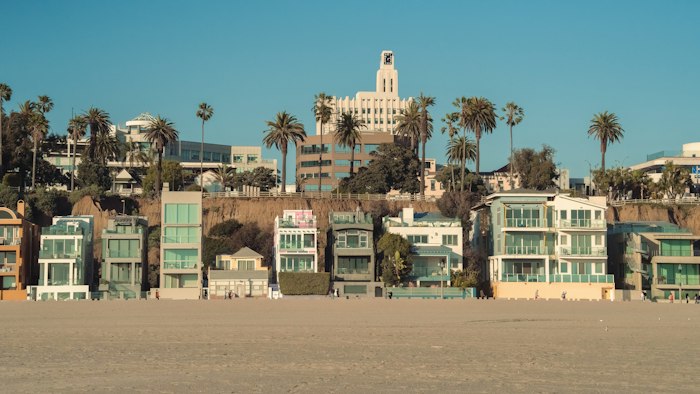
Santa Monica
Median $2,800,000
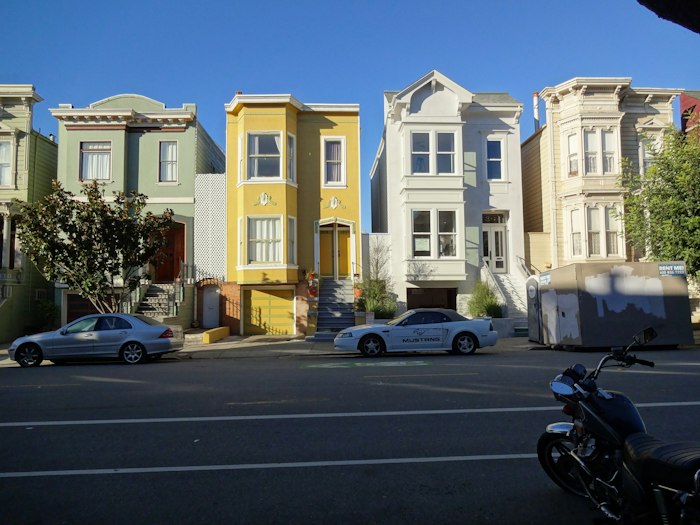
Venice
Median $2,100,000
Both beach communities — very different lifestyles and returns.
Santa Monica and Venice are separated by Rose Avenue, a single street, and a generation of buyer psychology. Santa Monica is the established coastal city — its own municipality, its own school district, a downtown with high-end retail, a pier that draws international tourism, and a stable affluent population that has been paying a premium to live there for fifty years. Venice is the creative wild card — bohemian roots, tech money, a canal district that looks like nothing else in California, and a price point that quietly offers better appreciation than its more famous neighbor. Both are coastal. Both are walkable. Both have beach access. But the buyer for a $2.8M Santa Monica craftsman is a fundamentally different person than the buyer for a $2.1M Venice canal-front bungalow. This comparison breaks down median price, days on market, appreciation, schools, lifestyle, buyer profile, ADU investment returns, and the strategic case for each. The right answer depends entirely on whether you are buying primarily for lifestyle, stability, and schools — or for upside, yield, and creative-class energy.
Santa Monica is its own city — separate municipality, separate school district, separate rent control rules — and that matters more than newcomers realize. The city limits cover roughly 8 square miles from Montana Avenue down to Ocean Park, from the beach to Centinela. The result is a strong, defensible identity: families stay for generations, public schools are consistently strong, and the median of $2.8M reflects a price floor that has held through every recent correction. Housing stock is heterogeneous — north of Montana you have multi-million-dollar Spanish and Cape Cod homes, Wilshire-Montana has mid-century condos, Sunset Park and Ocean Park have craftsman bungalows, and the apartment-dense corridors near the beach trade at investor pricing. Days on market average 21 — slower than Venice, because Santa Monica buyers are more selective and the inventory is more diverse. Appreciation at 6.9% YoY is moderate, but the trade-off is stability: Santa Monica properties hold value through downturns better than almost anywhere in LA. Buyers here are often families who chose Santa Monica specifically for the public schools, the walkability, and the long-term hold value.
Venice is the highest-velocity creative-class market in coastal LA. Originally built as a canal-and-pier resort, Venice has reinvented itself multiple times — beat poet enclave, surf culture, then bohemia, then tech. The Snapchat and Google offices on Main Street made Venice the original Silicon Beach, and the spillover effects are still working through pricing. Median sits at $2.1M, which is $700K below Santa Monica for comparable square footage, but Venice is appreciating at 9.3% — faster than its more expensive neighbor. The architectural mix is extraordinary: original beach cottages, Frank Gehry early work, contemporary glass-and-steel rebuilds, canal-front Cape Cods on the Linnie and Carroll canals. ADU returns in Venice are among the highest in LA — well-positioned ADUs on lots within a half-mile of Abbot Kinney generate 18%+ cap rates because of short-term rental demand. Buyers here are often creative-class professionals in their 30s and 40s, tech founders, design industry, film and music — buyers who actively want the energy of Abbot Kinney within walking distance.
Santa Monica-Malibu Unified School District (SMMUSD) — separate from LAUSD, consistently ranked among the strongest public districts in California. Roosevelt Elementary, McKinley, Will Rogers, Lincoln Middle, Samohi all have strong reputations. Driver of premium family demand.
LAUSD with active community involvement. Coeur d'Alene Elementary, Westminster Avenue, Mark Twain Middle. Strong private alternatives within 10 minutes including Crossroads, Wildwood, and Vistamar. Schools are less of a buyer driver here than in Santa Monica.
Third Street Promenade, Santa Monica Pier, Montana Avenue boutique shopping, Palisades Park along the bluffs. Restaurants range from old-guard institutions (Father's Office, Rustic Canyon) to high-end (Cassia, Mélisse). Strong farmers markets on Wednesday and Saturday.
Abbot Kinney Boulevard is the cultural spine — design retail, chef-driven restaurants, gallery district. The boardwalk and the canals each have their own micro-cultures. Felix, Gjelina, Gjusta, The Tasting Kitchen anchor the dining scene. Stronger nightlife than Santa Monica.
Santa Monica's housing stock spans nearly a century of California residential design. North of Montana, you find $5M+ Spanish, Tudor, and Cape Cod estates on large flat lots, many original to the 1920s and 1930s. The Wilshire-Montana corridor is dominated by mid-century condo buildings, some architecturally significant (the Embassy and the Champagne Towers among them). Sunset Park and Ocean Park have preserved California Craftsman bungalows on walkable streets close to Main Street. The Pico district has older multi-family stock that trades at investor pricing. This range means buyers can enter the Santa Monica market anywhere from $900K (older condos) to $20M+ (oceanfront estates) and still be in SMMUSD school boundaries.
Venice has one of the most architecturally diverse housing stocks on the Westside. The Linnie and Carroll canals have original 1900s Craftsman canal-front bungalows alongside contemporary glass rebuilds. The Oakwood and Milwood districts have working-class 1920s and 1930s bungalows mixed with modern infill. The walk streets near Abbot Kinney have a unique character — pedestrian-only courts with cottages and contemporary homes side by side. Frank Gehry's early work is scattered throughout. Buyers in Venice are buying into architectural personality more than uniformity, and the variety is part of the appeal. ADUs are common and well-yielding because of short-term and creative-class rental demand.
Santa Monica's 21-day average days-on-market reflects more selective buyers and more diverse inventory, not weaker demand. SMMUSD families dominate the single-family market and often take longer in due diligence because they intend to hold for 10 to 15 years through their children's school years. Inventory is most plentiful in spring; competition is most intense in zones with strong walk-to-school ratings. Condo inventory along the Wilshire corridor moves at varying speeds depending on building reputation, view, and HOA fee profile. Buyers focused on Sunset Park and Ocean Park craftsman inventory often face 5 to 10 competing offers on well-priced homes.
Venice's 18-day average and 9.3% YoY appreciation reflect concentrated creative-class and tech-buyer demand. Canal-front and Abbot Kinney-adjacent inventory routinely sees 8 to 14 offers and 4 to 8% above-asking results. Inventory is structurally limited because Venice has minimal new construction capacity — most lots are already built out, and rebuild cycles are long because of permit complexity. ADU-eligible properties trade at meaningful premiums because of the documented 18%+ cap rate potential. The strongest seasonal demand runs March through October, mirroring tourism and short-term rental cycles. December and January offer the best buyer-side negotiating leverage.
Best fit: Families with school-age children prioritizing public education. Long-term holders (10+ years). Buyers who value stability and walkability over yield and energy. Often dual-professional households at a senior career stage.
Best fit: Creative-class professionals, tech founders, design and entertainment industry. Buyers in their 30s and 40s. Investors interested in ADU yield. Buyers who want coastal living with daily access to high-design retail and dining.
Investment thesis: Santa Monica is a capital preservation play with consistent moderate appreciation (6 to 8% historical band) and the strongest downside resilience on the Westside, anchored by SMMUSD school district premium and municipal stability. Venice is a higher-velocity play (8 to 11% appreciation band) with meaningful ADU yield enhancement (18%+ cap rates available on well-positioned lots) and creative-class demand growth. For multi-decade family holders, the SMMUSD premium is structurally durable and justifies the price gap. For 5 to 10 year investors and yield-focused buyers, Venice offers superior risk-adjusted total return when ADU economics are factored in. Both are excellent generational holds for the right buyer profile.
Santa Monica offers stability, school district strength, and long-term hold value. Venice offers investment opportunity, faster appreciation, and creative-class energy. For families prioritizing public schools and multi-decade stability, Santa Monica is the answer — the SMMUSD premium alone justifies the price gap for many buyers. For investors, design professionals, and buyers in their 30s and 40s who can take a slightly higher volatility profile in exchange for better yield and faster appreciation, Venice wins. Both are excellent generational holds, but they serve fundamentally different buyer types.
"Venice is currently outperforming Santa Monica on appreciation, ADU yield, and creative-class buyer demand — but Santa Monica commands a structural premium that never fully erodes. The SMMUSD school district is the single biggest pricing variable on the Westside. If your kids are or will be school-age, the math frequently favors Santa Monica even at the higher entry point, because resale demand from other school-focused families is virtually permanent. If you are buying for yield, lifestyle energy, or because you genuinely want to live in the Abbot Kinney corridor, Venice is the better play and 9.3% appreciation gives you margin for short-term volatility. I have closed in both markets in the last 12 months and the buyer profiles are completely different. Be honest about which one you are."
Talk to Anthony — Free →Santa Monica is more expensive, with a median of $2.8M versus Venice at $2.1M — roughly a $700K gap for comparable square footage. The premium reflects Santa Monica's school district, municipal identity, and stability.
Venice is appreciating faster at 9.3% YoY versus Santa Monica's 6.9%. Venice has benefited from tech employer concentration and creative-class migration, while Santa Monica trades stability for slower percentage gains.
Santa Monica clearly. SMMUSD is its own district, separate from LAUSD, and consistently ranks among California's strongest public school systems. This is a primary driver of the Santa Monica premium for families.
Venice. Well-positioned ADUs within walking distance of Abbot Kinney generate 18%+ cap rates because of strong short-term and creative-class rental demand. Santa Monica has stricter ADU and short-term rental enforcement and lower yields.
Venice averages 18 days, Santa Monica averages 21 days. Both are competitive, but Santa Monica's slightly longer average reflects more diverse inventory and more selective buyers.
Both are excellent for long-term hold, but for different reasons. Santa Monica gives stability and downside protection. Venice gives appreciation upside and yield. Buyers focused on capital preservation lean Santa Monica; buyers focused on total return lean Venice.
Santa Monica and Venice are both excellent Westside coastal markets, but they serve fundamentally different buyer profiles. Santa Monica delivers stability, school district strength, and multi-decade hold value at a $700K premium. Venice delivers faster appreciation, ADU yield, and creative-class energy at a lower entry point. There is no objectively correct answer — only the answer that matches your school path, your investment horizon, and your relationship to lifestyle versus stability. Before you commit on either side of Rose Avenue, the right move is to walk specific properties with someone who knows both markets intimately and who can tell you which streets are moving and which are trading below their floor. Reach out for a free CMA and strategy conversation.