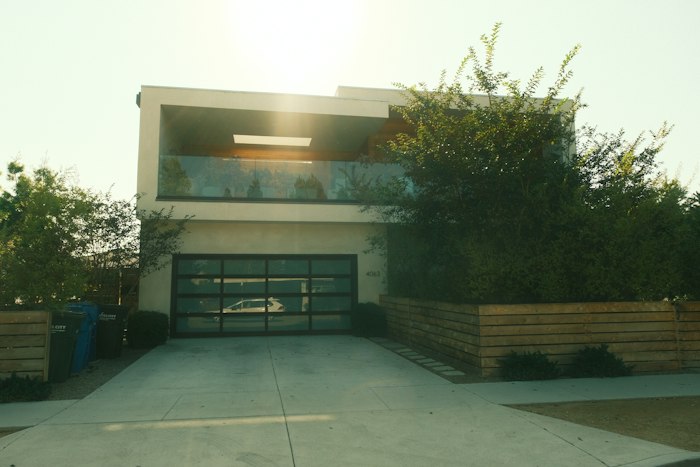
Culver City
Median $1,700,000
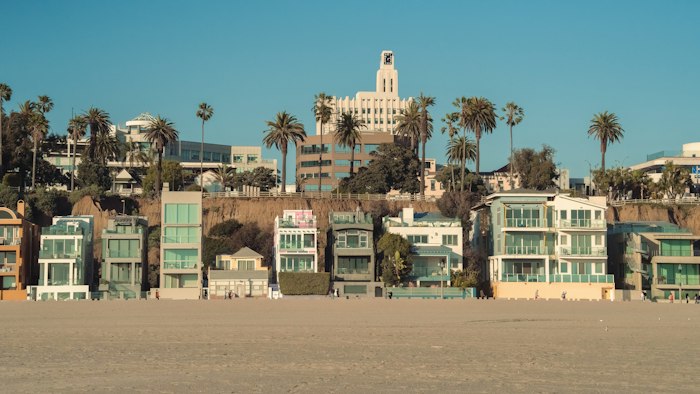
Santa Monica
Median $2,800,000
Both are powerful Westside markets. They serve completely different buyer profiles.
Culver City and Santa Monica are both Westside power markets, but they reflect fundamentally different bets on West LA living. Culver City is the Silicon Beach growth story — Apple, Amazon Studios, HBO, Sony Pictures, and a creative agency density that has reshaped the city over the past decade, driving the fastest appreciation in West LA (11.2% YoY) and the tightest inventory turnover (16 days). Santa Monica is the established coastal city — independent municipality, SMMUSD school district, walkable downtown, beach proximity, and a price floor that has held through every recent correction. The price gap is meaningful ($1.7M Culver City versus $2.8M Santa Monica), but the deeper question is which market actually fits your life. Are you buying for tech-corridor employer proximity and growth velocity, or for coastal stability and multi-decade family hold? This comparison breaks down the dimensions that matter, including for the buyer who can credibly choose either.
Culver City has transformed faster than any other West LA submarket in the last decade. Originally built around the MGM studio lot and Sony Pictures, the city quietly added Apple, Amazon Studios, HBO Max, and a wave of creative agencies — turning downtown Culver into a daily working hub for several thousand tech and entertainment professionals. The city covers roughly 5 square miles and operates as its own municipality with its own school district (Culver City Unified). Housing breaks across multiple submarkets: the hillside neighborhoods above downtown (Carlson Park, Sunkist Park) have preserved Spanish Colonial and California Craftsman homes from the 1920s and 1930s on larger lots; the flats near downtown have mid-century ranch and post-war single-family stock; downtown Culver has rebuilt around modern condos and live-work townhomes along Washington Boulevard and the Hayden Tract. Median sits at $1.7M, days on market 16 (the tightest in West LA), YoY appreciation 11.2% (the fastest in West LA). The walkability factor is real — buyers in downtown Culver can park their car on Friday and not touch it until Monday. Culver City Unified is its own district, separate from LAUSD, and widely considered one of the strongest public school systems on the Westside, driving significant family relocation demand. Buyer profile skews tech and entertainment industry professionals in their 30s and 40s, often dual-income, often making their first or second home purchase.
Santa Monica is its own city — separate municipality, separate school district, separate rent control rules — and that municipal independence is foundational. The city covers roughly 8 square miles from Montana Avenue down to Ocean Park, from the beach east to Centinela. SMMUSD (Santa Monica-Malibu Unified) is the dominant pricing factor, consistently ranked among California's strongest public school systems. Housing is heterogeneous — North of Montana has $3M to $15M+ Spanish and Cape Cod estates; Wilshire-Montana is mid-century condo dense; Sunset Park and Ocean Park have preserved California Craftsman bungalows; the apartment-dense corridors near the beach trade at investor pricing. Median sits at $2.8M, days on market 21, YoY appreciation 6.9% — moderate but with exceptional downside resilience. Santa Monica properties hold value through downturns better than nearly anywhere in California outside Beverly Hills. Buyers are often families who chose Santa Monica specifically for SMMUSD, the walkability, and the long-term hold value. The trade-off relative to Culver City is moderate appreciation in exchange for structural stability and beach proximity.
Culver City Unified is its own district — separate from LAUSD — and widely considered one of the strongest public school systems on the Westside. Linwood Howe Elementary, El Marino Language School (dual immersion Spanish/Japanese), La Ballona Elementary, Culver City Middle School, and Culver City High School all have strong reputations and drive significant family relocation demand. The school district premium is a primary driver of Culver City's pricing in the hillside family neighborhoods.
Santa Monica-Malibu Unified (SMMUSD) is also its own district, separate from LAUSD. Roosevelt Elementary, McKinley, Will Rogers, Lincoln Middle School, and Samohi (Santa Monica High School) all have strong reputations. SMMUSD's reputation is established at the California top-tier — slightly broader recognition than Culver City Unified, though both are excellent. Strong private alternatives nearby (Crossroads, New Roads, Wildwood).
Downtown Culver City is fully walkable. Platform shopping center, Citizen Public Market, Father's Office, Akasha, Vespertine. Kirk Douglas Theatre and the Culver Hotel anchor the cultural scene. The Metro Expo Line connects downtown Culver to Santa Monica and downtown LA without a car — a meaningful lifestyle differentiator. The neighborhood feel is closer to a real city downtown than most West LA submarkets.
Third Street Promenade and Santa Monica Pier anchor public space; Montana Avenue holds the boutique retail concentration; Main Street has casual dining and design district; Palisades Park along the bluffs gives Santa Monica its most distinctive walkable amenity. Restaurants range from old-guard institutions (Father's Office, Rustic Canyon) to high-end (Cassia, Mélisse). Wednesday and Saturday farmers markets are the strongest on the Westside. Beach access is direct.
Culver City's housing stock combines preserved Spanish Colonial and California Craftsman homes in the hillside neighborhoods (Carlson Park, Sunkist Park) with modern condo and townhome inventory in the rebuilt downtown core. The flats have mid-century ranch and post-war single-family on smaller lots. Downtown Culver has rebuilt around contemporary mid-rise condos along Washington Boulevard and live-work townhomes in the Hayden Tract. This architectural range means buyers can enter at $1.7M (older single-family in the hills) or $2.5M+ (modern downtown condos) within the same school district.
Santa Monica's housing stock spans nearly a century of California residential design. North of Montana has $5M+ Spanish, Tudor, and Cape Cod estates on large flat lots. The Wilshire-Montana corridor is dominated by mid-century condo buildings, some architecturally significant. Sunset Park and Ocean Park have preserved California Craftsman bungalows. The Pico district has older multi-family stock at investor pricing. Range: $900K (older condos) to $20M+ (oceanfront estates) within SMMUSD boundaries.
Culver City's 16-day average days-on-market is the tightest in West LA and reflects demand depth from tech employers plus family relocations driven by Culver City Unified. Well-priced single-family in the hills routinely sees 8 to 15 offers with 5 to 10% above-asking outcomes. Downtown condo inventory moves slightly slower because of building-specific HOA and amenity profiles. Spring through early summer sees strongest competition, timed to the school calendar. December offers the best buyer-side negotiating leverage. Off-market activity through tech-employee networks is meaningful in the $2M to $3M tier.
Santa Monica's 21-day average days-on-market reflects more selective buyers and more diverse inventory. SMMUSD families dominate the single-family market and often take longer in due diligence because they intend to hold for 10 to 15 years. Inventory is most plentiful in spring; competition is most intense in zones with strong walk-to-school ratings. Condo inventory along Wilshire moves at varying speeds depending on building reputation, view, and HOA fee profile. Sunset Park and Ocean Park craftsman inventory often sees 5 to 10 competing offers on well-priced homes.
Best fit: Dual-income tech, entertainment, or creative agency professionals in their 30s and 40s. Buyers who value walkability over square footage. Families specifically choosing Culver City Unified school district. Investors looking at the strongest appreciation track record in West LA. Often first or second-time buyers.
Best fit: Dual-professional families with school-age children prioritizing SMMUSD. Long-term holders (10 to 20 years). Buyers who value walkability and beach proximity. Often senior-career-stage households who chose Santa Monica specifically for the school district and coastal lifestyle.
Investment thesis: Culver City is the West LA appreciation leader at 11.2% YoY, backed by tech employer concentration (Apple, Amazon, HBO, Sony) plus Culver City Unified school district — the combination creates a structural demand floor unusual for the price point. Santa Monica is a coastal capital preservation play with moderate appreciation (6 to 8% band) and exceptional downside resilience anchored by SMMUSD plus beach proximity that no other Westside neighborhood can replicate. For appreciation-focused buyers, dual-income tech professionals, and families specifically targeting Culver City Unified, Culver City delivers superior risk-adjusted total return. For families prioritizing coastal lifestyle, beach proximity, and multi-decade SMMUSD-anchored holds, Santa Monica justifies the $1.1M premium. Both serve different buyer profiles and the strategic fit depends entirely on buyer objectives.
Culver City wins on entry price, appreciation speed, tech employer proximity, walkable downtown density, and growth velocity. Santa Monica wins on coastal lifestyle, SMMUSD schools, beach proximity, downside resilience, and established stability. The two markets are not really competing for the same buyer — the Culver City buyer is typically a 30s/40s tech professional prioritizing employer proximity and growth, while the Santa Monica buyer is typically a senior-career family prioritizing schools and stability. If you are buying for Silicon Beach employer proximity, faster appreciation, and walkable downtown living, Culver City. If you are buying for SMMUSD, beach proximity, and multi-decade stability, Santa Monica.
"Five years ago this was not really a comparison — Culver City was a different tier of market and Santa Monica buyers were not considering it. Today it is one of the most common comparisons I run because the Culver City story is real. The tech employer concentration plus the school district plus walkable downtown is rare combination at this price. The honest test for buyers: where do you work? If your office is in the Silicon Beach corridor — Apple Culver, Amazon Studios, HBO, Sony — Culver City wins because daily life is built around walking to work. If your office is in Century City or downtown LA, or you work remotely and value beach proximity, Santa Monica wins because daily life is built around the coast. The third buyer is the one who says "either works for me" — that buyer should look at school path. SMMUSD has broader name recognition; Culver City Unified is comparably strong locally but less recognized nationally. I have closed in both this year. Be honest about what your daily life actually looks like."
Talk to Anthony — Free →Santa Monica is significantly more expensive, with a median of $2.8M compared to Culver City at $1.7M — a $1.1M gap. The premium reflects SMMUSD school district, beach proximity, established municipal stability, and broader brand recognition.
Culver City, by a meaningful margin. Culver City is appreciating at 11.2% YoY versus Santa Monica at 6.9%. Culver City's appreciation is the fastest in West LA, driven by tech employer concentration and family relocation demand for Culver City Unified.
Both have excellent public school districts. Santa Monica has SMMUSD, one of California's top-ranked. Culver City has Culver City Unified, similarly strong locally but with slightly less national recognition. For families prioritizing public schools, both work. SMMUSD has broader brand recognition; Culver City Unified is comparable locally.
Culver City, by a wide margin. Apple, Amazon Studios, HBO Max, Sony Pictures, and a wave of creative agencies are concentrated in downtown Culver. Walking-distance commute is meaningful. Santa Monica has tech employers but not at the Silicon Beach center-of-gravity concentration Culver City offers.
Culver City averages 16 days — the tightest in West LA. Santa Monica averages 21 days. Culver City's tighter market reflects employer-driven demand and limited inventory. Both are competitive markets where multiple offers and above-asking outcomes are common.
Both are excellent for long-term family holds. Santa Monica gives SMMUSD schools, beach proximity, and exceptional downside resilience. Culver City gives Culver City Unified, walkable downtown, and the fastest appreciation in West LA. For appreciation-focused families, Culver City. For stability-focused families, Santa Monica.
Santa Monica, by a wide margin. Santa Monica is directly on the beach — Ocean Park residents can walk to the sand. Culver City is roughly 6 miles from the closest beach (via Venice or Marina del Rey). For buyers prioritizing daily beach access, Santa Monica is the only correct answer between these two.
Culver City and Santa Monica are both excellent Westside positions, but they serve fundamentally different buyer profiles. Culver City delivers Silicon Beach employer proximity, the fastest appreciation in West LA, walkable downtown living, and Culver City Unified schools at $1.7M median. Santa Monica delivers SMMUSD schools, beach proximity, walkable downtown, and exceptional downside resilience at $2.8M median. The honest question is whether you are buying for tech-corridor growth or coastal stability — those are different bets requiring different temperaments. Before committing on either, walk specific properties in both with someone who has closed in both markets and can tell you which streets, which sellers, and which timing windows fit your specific goals. Reach out for a free CMA and strategy conversation.