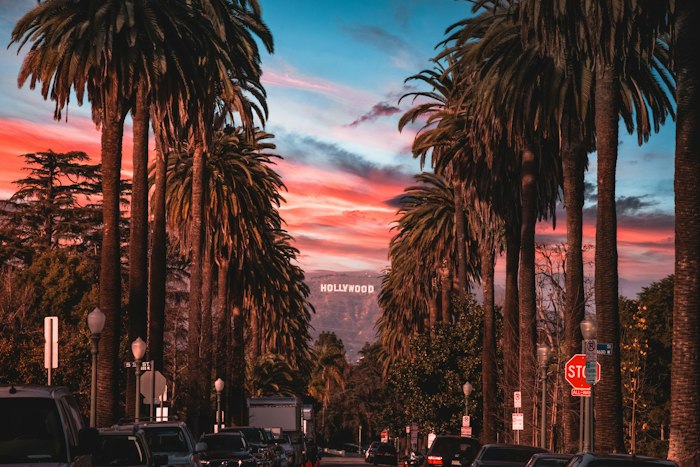
Beverly Hills
Median $5,200,000
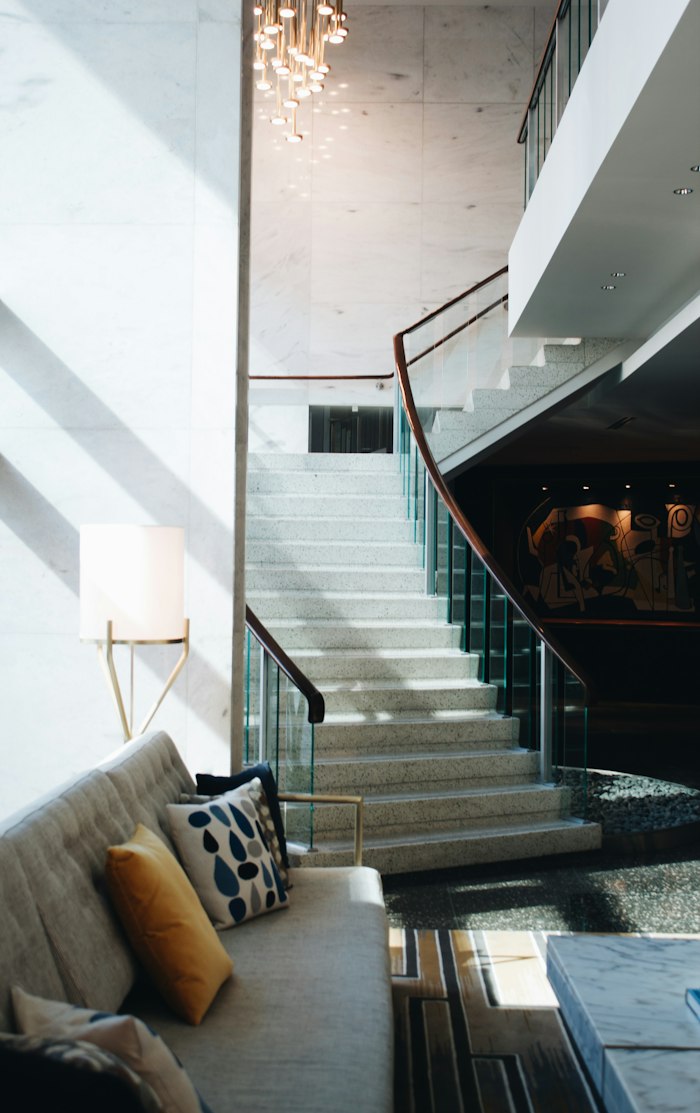
Westwood
Median $1,950,000
Prestige and identity vs. practicality and proximity — two very different Westside markets.
Beverly Hills and Westwood are both powerful Westside markets, but they represent very different lifestyles, and the decision between them is rarely just about price. Beverly Hills is about prestige, identity, dedicated city services, luxury retail concentration, and the long-term global value of the name itself. Westwood is about practicality, proximity to UCLA and the broader medical research corridor, fast access to Century City and Brentwood, and a more functional day-to-day rhythm. The median price gap is enormous — $5.2M in Beverly Hills versus $1.95M in Westwood — but the gap reflects different products, different buyers, and different bets on what kind of West LA living matters most over the next decade. This comparison breaks down median price, days on market, appreciation, schools, lifestyle, buyer profile, architectural typology, and the strategic case for each. If you are choosing between these two, the right question is not which is better — it is which one fits how you actually live, where you need to be every day, and what type of long-term value matters most.
Beverly Hills is its own city — not a Los Angeles neighborhood. That municipal independence is the foundation of almost everything that follows: separate police force with the highest officer-to-resident ratio in California, separate school district (Beverly Hills Unified) consistently ranked among the strongest public systems on the Westside, separate municipal services, separate zoning, and a brand recognition that translates directly into international buyer demand. The city covers roughly 5.7 square miles and breaks into distinct submarkets. The Flats (south of Sunset, north of Wilshire) is the historic core — flat tree-lined streets, original 1920s and 1930s Spanish and Tudor estates on 8,000 to 15,000 square foot lots, median pricing in the $5M to $12M band. North of Sunset (the actual Beverly Hills hillsides) trades at $8M to $50M+ for estate-scale homes with views. Beverly Hills Post Office (BHPO) is technically unincorporated LA County but carries the Beverly Hills 90210 zip code at meaningfully lower price points. Median across the city sits at $5.2M, days on market average 34 — slower than most of West LA because the buyer pool is smaller and more selective — and YoY appreciation is 5.8%, moderate but with the strongest downside resilience anywhere in West LA. Beverly Hills holds value through every market correction better than any other West LA submarket.
Westwood occupies the wedge of West LA between Beverly Glen and the 405, anchored by the UCLA campus on the north and Wilshire Boulevard's high-rise corridor on the south. The geography matters: UCLA brings 45,000+ students, 50,000+ faculty and staff, and one of the largest medical research complexes on the West Coast (Ronald Reagan UCLA Medical Center, Resnick Neuropsychiatric Hospital, the Geffen School of Medicine network). That concentration of education and medical employment creates structural rental demand that does not exist elsewhere on the Westside. Westwood breaks into clear submarkets: Westwood Village (the original commercial core, condo-heavy, walkable to UCLA), Holmby Hills (the ultra-luxury enclave east of Hilgard with $10M to $100M+ estates — technically Westwood-adjacent), the Westwood Hills (mid-priced single-family north of Wilshire), Little Holmby (transitional zone between Westwood and Holmby Hills), and the Wilshire Corridor itself (high-rise condo concentration, $1M to $15M+ depending on building). Median sits at $1.95M citywide — but the figure is misleading because it averages condo inventory against single-family. Single-family in Westwood Hills typically trades at $3M to $6M; Wilshire Corridor condos range from $1M studios to $15M+ penthouses; Holmby Hills estates start at $10M and go to $100M+. Days on market average 21, YoY appreciation is 7.6% — faster than Beverly Hills because the entry points are accessible to a much wider buyer pool.
Beverly Hills Unified School District (BHUSD) — separate from LAUSD, consistently ranked among California's top public school systems. Beverly Vista Elementary, Hawthorne, El Rodeo, Beverly Hills High School all have strong reputations and drive significant family relocation demand. The school district premium alone justifies a meaningful portion of the Beverly Hills price gap for buying families with school-age children. Strong private alternatives nearby (Harvard-Westlake Middle School in Beverly Glen, Marlborough, Buckley).
LAUSD with strong neighborhood schools. Warner Avenue Elementary, Fairburn Avenue Elementary, and University High School all have solid reputations. UCLA Lab School (private, K-6, affiliated with UCLA Graduate School of Education) is highly regarded and a significant draw for academic families. Strong private alternatives within 10 minutes including Mirman School, Harvard-Westlake, and Brentwood School. Public schools are good but not at the BHUSD level.
Rodeo Drive is the global retail anchor — Hermès, Chanel, Louis Vuitton, Cartier, and the broader luxury concentration around the Two Rodeo and Rodeo Plaza. Beverly Wilshire, Beverly Hills Hotel, and Maybourne Beverly Hills anchor the hospitality scene. Dining ranges from old-guard (Spago, The Grill, Polo Lounge) to contemporary (Avra, Cipriani, Wally's). Beverly Gardens Park along Santa Monica Boulevard provides green space. Closest public beach is roughly 6 to 8 miles via Santa Monica Boulevard or Sunset.
Westwood Village (the original commercial center adjacent to UCLA) offers walkable dining, shopping, the historic Fox Theatre, the Hammer Museum, and the campus presence of UCLA itself. Diddy Riese cookies, Stan's Donuts, Lemonade, Tender Greens, and a wave of student-friendly dining define the day-to-day. Higher-end dining concentrates along Wilshire (Hamasaku, Soulmate, Maru). Westwood Village is the most genuinely college-town atmosphere in West LA. Easy 10-minute drive to Brentwood, 15 to Santa Monica, 15 to Century City.
Beverly Hills preserves the largest concentration of original 1920s and 1930s estate architecture on the Westside. The Flats has intact Spanish Colonial Revival, Tudor Revival, Mediterranean, and Georgian estates on tree-lined streets, many designed by named period architects (Paul Williams, Wallace Neff, John Byers). North of Sunset has hillside contemporaries, Mediterranean, and modern estate-scale homes on larger lots with views. The city has strict design review and demolition restrictions, which preserves character but limits the buyer who wants modern open-plan layouts in original housing stock. Renovation requires careful navigation of historic preservation requirements. New construction is uncommon and tightly regulated. The architectural quality and consistency is part of the brand and the long-term value preservation.
Westwood's architectural mix is among the most varied on the Westside. The Wilshire Corridor concentrates a dense run of high-rise condominium buildings dating from the 1960s through contemporary builds, including architecturally significant towers (The Carlyle, The Wilshire House, The Beverly West). Westwood Village has preserved 1930s commercial architecture and apartment buildings adjacent to UCLA's campus, which itself includes major works of period and contemporary architecture. The Westwood Hills and Westwood Heights neighborhoods have mid-century single-family and original Spanish Revival homes on hillside lots. Holmby Hills (Westwood-adjacent) holds ultra-luxury estate inventory on the largest residential lots in West LA. This range means buyers can enter Westwood anywhere from $1M (Wilshire Corridor studios) to $50M+ (Holmby Hills estates) within a 1.5-mile radius.
Beverly Hills's 34-day average days-on-market reflects a smaller, more selective buyer pool and longer due diligence cycles typical of luxury and ultra-luxury transactions. The market is bifurcated: $3M to $8M Flats inventory moves at relatively normal Westside velocity (3 to 6 weeks), while $10M+ estate inventory often takes 3 to 9 months. International buyer flow is meaningful (estimated 20 to 30% of $5M+ transactions involve foreign capital) and creates demand that is partially decoupled from U.S. macro conditions. Off-market activity is unusually significant — a substantial share of $10M+ transactions never appear in the MLS. The seasonal pattern is less pronounced than other Westside markets because international buyer flow runs year-round. 5.8% YoY appreciation is moderate, but the downside resilience is unmatched on the Westside — Beverly Hills holds value through corrections better than any other submarket.
Westwood's 21-day average reflects a broader, more accessible buyer pool than Beverly Hills. Condo inventory along the Wilshire Corridor turns at varying speeds depending on building reputation, view, HOA fee structure, and amenity profile — careful comparable analysis is essential when evaluating Corridor properties because price dispersion across buildings is wide. Single-family inventory in Westwood Hills moves faster (sub-18 days) and routinely sees 5 to 10 competing offers. UCLA-driven rental demand creates a consistent investor buyer pool that supports condo prices through cycles. 7.6% YoY appreciation outpaces Beverly Hills, but the trade-off is meaningfully less downside resilience — Westwood condos can move 10 to 15% in either direction during cycle inflection points. Spring through early summer sees strongest competition, timed to UCLA academic calendar and medical residency cycles.
Best fit: Multi-generational holders, international buyers seeking U.S. real estate with global brand recognition, families with school-age children prioritizing BHUSD, and ultra-high-net-worth buyers (UHNW) who want dedicated city services and the highest concierge-level municipal experience available in California. Generally older buyer profile (45+) at a senior career or post-career life stage.
Best fit: UCLA faculty and staff, medical professionals at the Ronald Reagan complex, dual-career professional households at earlier career stages, condo investors capturing structural rental demand from the UCLA ecosystem, and family buyers who want strong Westside schools at a meaningfully lower entry point than Beverly Hills or Santa Monica. More varied buyer pool across income tiers.
Investment thesis: Beverly Hills is a capital preservation and prestige-asset play with the strongest downside resilience on the Westside, BHUSD school district premium, dedicated municipal services, and international buyer flow that partially decouples demand from U.S. macro conditions. Moderate appreciation (5 to 7% historical band) but exceptional volatility resistance. Westwood is a higher-velocity play (7 to 9% appreciation band) with two distinct strategies available: single-family in the Hills as a family hold leveraging Westwood's schools and UCLA proximity, or condo investment along the Wilshire Corridor capturing structural rental demand from UCLA faculty, medical residents, and graduate students. For UHNW capital preservation, generational holds, and family buyers prioritizing BHUSD, Beverly Hills justifies the premium. For yield-focused investors, professional buyers under $3M, and UCLA-employment-anchored households, Westwood delivers superior risk-adjusted return.
Beverly Hills wins on brand prestige, school district quality, downside resilience, dedicated municipal services, and ultra-luxury inventory depth. Westwood wins on entry price, appreciation speed, UCLA and medical corridor proximity, condo investment yield, and walkable village density. The two markets are not really competing for the same buyer — a Beverly Hills buyer is typically a different person at a different life stage with different priorities than a Westwood buyer. If you are buying for prestige, generational hold, BHUSD schools, or ultra-luxury — Beverly Hills. If you are buying for practicality, proximity to UCLA or Century City, walkable density, or condo yield — Westwood. Both are excellent Westside positions for the right buyer profile.
"These two markets serve completely different buyers, which is why the median price gap is $3.2M and why both can keep appreciating without competing with each other. Beverly Hills is the global brand play — the buyers I close in BH are generally older, often international, often multi-generational holders who care about BHUSD schools and dedicated city services. The downside resilience is real. Through every correction I have worked, Beverly Hills holds value better than any other West LA submarket — that is the whole point. Westwood is the practical play — UCLA and the medical complex create employer demand that is unlike anywhere else on the Westside, and the appreciation per dollar is faster than Beverly Hills. If you are buying a condo on the Wilshire Corridor for yield, you are making a different bet than someone buying a Flats Tudor for legacy. Both bets are valid. The honest question is which buyer you are. I have closed in both markets and the conversation is completely different — be clear with yourself before you decide."
Talk to Anthony — Free →Beverly Hills is significantly more expensive, with a median of $5.2M compared to Westwood's $1.95M — a $3.25M gap. The gap reflects different products: Beverly Hills is dominated by single-family estate inventory in BHUSD school boundaries, while Westwood's median is averaged across condo and single-family inventory.
Beverly Hills has the edge for public schools. Beverly Hills Unified (BHUSD) is its own district and consistently ranks among the strongest public systems on the Westside. Westwood schools are LAUSD with strong neighborhood reputations (Warner, Fairburn, University High) plus the highly regarded UCLA Lab School, but they do not match BHUSD's sustained ranking.
Westwood is appreciating faster at 7.6% YoY versus Beverly Hills at 5.8%. Westwood's faster appreciation reflects a broader, more accessible buyer pool and UCLA-driven structural demand. Beverly Hills trades faster appreciation for exceptional downside resilience and brand stability.
Westwood, by a wide margin. UCLA faculty, Ronald Reagan UCLA Medical Center physicians, and medical residents almost universally choose Westwood for the walking-distance commute. Beverly Hills is a 10 to 15 minute drive but does not offer the same daily-life proximity to campus and the medical complex.
Beverly Hills averages 34 days, the slowest in West LA, reflecting a smaller more selective buyer pool and longer due diligence cycles typical of luxury transactions. Westwood averages 21 days — closer to West LA standard velocity, with condos and single-family moving at different speeds within the broader market.
Westwood, decisively. The Wilshire Corridor concentrates dense condominium inventory with structural rental demand from UCLA faculty, medical residents, graduate students, and Century City professionals. Beverly Hills has limited condo inventory and most luxury condos do not perform as rental investments at their price point. Westwood Corridor condos under $3M typically yield 4 to 5.5% gross.
Beverly Hills, primarily because of brand recognition. International buyers seeking U.S. real estate often specifically target Beverly Hills for the global name value, dedicated city services, and prestige association. Westwood draws international buyers but on a smaller scale and typically tied to UCLA or medical employment.
Both are excellent generational holds for different reasons. Beverly Hills offers BHUSD schools, brand stability, and the strongest downside resilience on the Westside — capital preservation with moderate appreciation. Westwood offers stronger total return through faster appreciation and condo yield potential — but with more volatility. For families with school-age children prioritizing public schools, Beverly Hills is structurally the cleaner trade. For families willing to manage more variability for higher returns, Westwood delivers more upside.
Beverly Hills and Westwood are both excellent Westside markets, but they serve fundamentally different buyer types. Beverly Hills delivers global brand recognition, dedicated city services, BHUSD school district, and the strongest downside resilience on the Westside at a $5.2M median. Westwood delivers UCLA and medical corridor proximity, walkable village living, condo investment depth, and faster appreciation per dollar at a $1.95M median. There is no objectively correct answer — only the answer that matches how you live, where you need to be each day, and what type of long-term value matters to you. Before you commit on either, the right move is to walk specific properties with someone who has closed in both markets and can tell you which streets, which buildings, and which sellers are positioned correctly right now. Reach out for a free CMA and strategy conversation.
