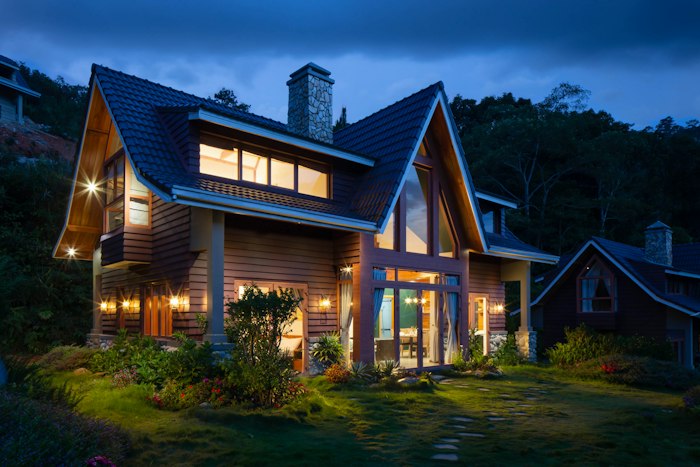
West Adams
Median $1,150,000
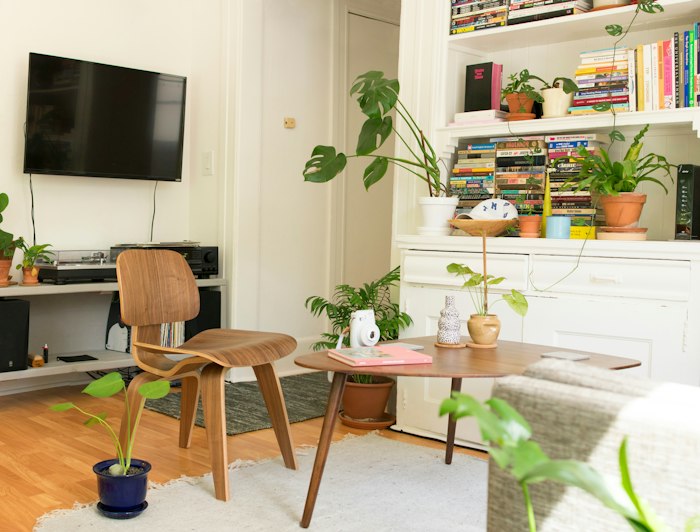
Mid-City
Median $1,050,000
Both are rapidly repricing. One has the architectural depth, the other has Mid-Wilshire proximity.
West Adams and Mid-City are the two most active rising-market value plays in central Los Angeles, and they are the comparison most experienced buyers actually run when they ask "where is the next West LA story?" West Adams runs from Crenshaw Boulevard east to La Cienega, anchored by the historic preservation districts (Jefferson Park, West Adams Heights, Sugar Hill) and the highest density of preserved pre-1925 California Craftsman architecture in Los Angeles. Mid-City runs immediately north, bounded roughly by Pico Boulevard, La Brea, Venice Boulevard, and La Cienega, with a more varied architectural mix and direct proximity to Mid-Wilshire employment plus the Crenshaw / LAX Metro Line that opened in 2024. Both neighborhoods are experiencing rapid repricing — West Adams at 13.6% YoY (the highest in LA County), Mid-City at 11.4% YoY. The decision between them comes down to whether you prioritize architectural depth and Metro Expo Line access (West Adams) or Mid-Wilshire employer proximity and the new Crenshaw Metro Line (Mid-City). This comparison breaks down the dimensions that matter, including the gentrification dynamics that affect both markets.
West Adams covers a substantial swath of South-Central-adjacent Los Angeles from Crenshaw Boulevard east to La Cienega, bounded by Washington Boulevard to the south and the 10 freeway to the north. The neighborhood holds the highest density of preserved pre-1925 California Craftsman architecture in Los Angeles, including significant Greene & Greene-adjacent works, original streetcar-suburb housing stock from the 1900s through 1920s, and concentrated historic preservation districts (Jefferson Park, West Adams Heights, Sugar Hill). For most of the 20th century, West Adams was a primarily African American neighborhood with strong community fabric anchored by historic churches and longstanding family ownership. Beginning around 2015, three factors converged: the Metro Expo Line opened (direct rail access to downtown LA and Santa Monica), USC began a real estate expansion that reshaped the western edge, and creative-class buyers priced out of Highland Park and Echo Park began moving south and west. Median sits at $1.15M, days on market 23, YoY appreciation 13.6% — the highest in LA County. The buyer pool is diversifying rapidly: longtime African American homeowners are selling at meaningful price gains, creative-class buyers (design, film, music, tech) are entering at sub-$1.5M, and investors are competing for the highest-quality preserved Craftsman inventory.
Mid-City covers the area between Pico Boulevard (south), Venice Boulevard (south), La Brea Avenue (east), Robertson Boulevard (west), and roughly Wilshire Boulevard (north depending on micro-neighborhood definition). The neighborhood was developed primarily in the 1920s and 1930s as middle-class single-family housing stock, with a more varied architectural mix than West Adams — Spanish bungalows, California Craftsman duplexes, English Cottage, and some early Mediterranean and Tudor Revival single-family homes on 5,000 to 8,000 square foot lots. Median sits at $1.05M, days on market 26, YoY appreciation 11.4%. The neighborhood's repricing accelerated meaningfully after the Crenshaw / LAX Metro Line opened in 2024, providing direct rail access from the heart of Mid-City to LAX (and connecting to the Expo Line for downtown / Santa Monica access). The buyer pool is similarly diversifying: longtime Black and Latino homeowners are selling at meaningful price gains, while creative-class incoming buyers, Mid-Wilshire-employed professionals, and investors are entering. Mid-City's repricing dynamics are similar to West Adams but on a slightly later cycle.
LAUSD schools — Foshay Learning Center, Pio Pico Middle School, Audubon Middle School, and various magnet programs serve the area. USC's expansion has brought USC-affiliated school partnerships in some submarkets. Many incoming creative-class families commit to specific magnet programs or choose private alternatives (View Park Prep, Lycée Français, Brentwood School for those willing to commute). Schools are a weaker dimension of West Adams's value proposition.
LAUSD schools — Cienega Elementary, Saturn Elementary, Mid-City Magnet at LAUSD Wonderland Elementary serve parts of the area. Various LAUSD magnet programs serve incoming families. Private alternatives within 10 minutes include Westside Neighborhood School, the New Roads School, and Hillel Hebrew Academy. Like West Adams, schools are not a primary buyer driver — most incoming family buyers commit to specific magnet placements or private alternatives.
Adams Boulevard now has a wave of chef-driven restaurants (Mizlala, Highly Likely, Alta Adams, Tartine's West Adams location) alongside long-standing community institutions. The Jefferson Park and West Adams Heights historic districts have walkable architectural tourism. Direct Metro Expo Line access to downtown and Santa Monica is a meaningful daily lifestyle differentiator. USC's expansion brings cultural infrastructure (Galen Center, USC Village). Community fabric remains strong despite gentrification dynamics — historic Black churches, longtime family residents, and community organizations are part of the daily texture.
Pico Boulevard, Venice Boulevard, and Fairfax/La Brea retail corridors anchor commercial life. The Original Farmers Market and the Grove (Caruso) are within 10 to 15 minutes. New chef-driven restaurants are opening rapidly (Manuela, Republique-adjacent activity). The Crenshaw / LAX Metro Line provides direct rail access to LAX and connects to the Expo Line for downtown access. The neighborhood has more typical LA neighborhood rhythm (less architectural-tourism density than West Adams, more day-to-day commercial activity).
West Adams holds the highest density of preserved pre-1925 California Craftsman architecture in Los Angeles. Jefferson Park, West Adams Heights, and Sugar Hill historic districts have significant concentrations of original Greene & Greene-adjacent Craftsman, Spanish Colonial Revival, Victorian, and early 20th-century streetcar-suburb housing stock. Lot sizes are larger than current Westside averages (7,500 to 12,000 square feet). The architectural quality is genuinely exceptional for the price point, and the preserved historic character is meaningful protection against teardown-rebuild cycles.
Mid-City has a more varied architectural mix than West Adams — Spanish bungalows, California Craftsman duplexes, English Cottage, early Mediterranean, and Tudor Revival single-family homes on 5,000 to 8,000 square foot lots. Lot sizes are smaller than West Adams. The architectural depth is meaningful but less concentrated and less protected than West Adams's historic preservation districts. Recent flip activity is significant — buyers should engage local expertise to distinguish thoughtful period-appropriate renovations from rushed flips.
West Adams's 23-day average days-on-market reflects a market in transition. Original African American family homeowners selling to creative-class incoming buyers typically run longer due diligence cycles. Well-priced restored Craftsman inventory in Jefferson Park and Sugar Hill historic districts can see 6 to 12 competing offers and 5 to 12% above-asking outcomes. The 13.6% YoY appreciation rate is the highest in LA County. Forward returns are likely strong through the next 3 to 5 years but may compress as the gentrification cycle matures.
Mid-City's 26-day average days-on-market is slightly slower than West Adams, reflecting less architectural-collector demand and more practical-buyer due diligence. Well-priced 1920s single-family routinely sees 5 to 10 competing offers with 3 to 8% above-asking outcomes. The Crenshaw / LAX Metro Line opening (2024) measurably accelerated demand in the western portion of Mid-City along the new transit corridor. 11.4% YoY appreciation is exceptional but slightly behind West Adams as Mid-City entered the rapid repricing phase later.
Best fit: Creative-class buyers (design professionals, film, music, tech) priced out of Highland Park or Echo Park looking for Craftsman bones at sub-$1.5M. Investors targeting LA County's fastest-appreciating submarket. Buyers comfortable with early-cycle gentrification dynamics and willing to walk specific streets with local expertise.
Best fit: Mid-Wilshire-employed professionals, creative-class buyers seeking value at sub-$1.2M entry points, buyers prioritizing the new Crenshaw / LAX Metro Line corridor, and investors targeting a slightly later-cycle repricing story than West Adams. The buyer pool is broader than West Adams (less architecture-focused, more practical-commute oriented).
Investment thesis: West Adams is the highest-velocity early-cycle play in LA County (13.6% YoY), with exceptional preserved Craftsman architecture providing structural protection against teardown cycles and historic preservation district designation in key submarkets. Forward returns are likely strong through 3 to 5 years (potentially 10 to 14% annually) but compress as gentrification matures. Mid-City is a slightly later-cycle play with similar dynamics — 11.4% YoY appreciation, ongoing repricing accelerated by the new Crenshaw / LAX Metro Line, and a more practical-buyer pool. Forward returns likely run 9 to 12% annually through 3 to 5 years. For maximum appreciation upside and architecture-focused buyers, West Adams. For slightly lower entry and Mid-Wilshire commute proximity, Mid-City.
West Adams wins on appreciation rate, architectural depth, historic preservation district protection, and Metro Expo Line access. Mid-City wins on slightly lower entry price, Mid-Wilshire employer proximity, new Crenshaw / LAX Metro Line corridor, and a broader practical-buyer pool. Both are exceptional opportunities for buyers with a 3 to 5 year horizon and risk tolerance for early-cycle gentrification dynamics. If you specifically want architectural depth and the fastest appreciation in LA County, West Adams. If you want slightly lower entry, Mid-Wilshire commute access, and Crenshaw Metro Line proximity, Mid-City.
"These are the two most active rising-market plays in central LA right now and both have real forward upside. West Adams has the architecture — pre-1925 Craftsman density that does not exist anywhere else in Los Angeles County, period. If you specifically want a 1908 Craftsman with original bones on a 9,000 square foot lot at sub-$1.3M, West Adams is the only answer. Mid-City has more practical advantages — slightly lower entry, the new Crenshaw / LAX Metro Line, faster access to Mid-Wilshire employment. Both have real gentrification dynamics that require thoughtful buyer participation — supporting local Black-owned businesses, respecting community history, engaging with neighborhood organizations. I have closed in both markets this year. The honest test: do you want architectural depth (West Adams) or practical commute proximity (Mid-City)? That question separates most buyers within sixty seconds."
Talk to Anthony — Free →West Adams is slightly more expensive at $1.15M median versus Mid-City at $1.05M — roughly a $100K gap. The premium reflects denser preserved Craftsman architecture and historic preservation district designation in key West Adams submarkets.
West Adams, marginally — 13.6% YoY versus Mid-City at 11.4%. West Adams is the highest-appreciation market in LA County. Both are exceptional rates; the difference reflects West Adams's earlier-cycle repricing and architecture-collector demand.
West Adams, by a clear margin for pre-1925 Craftsman density. West Adams holds the highest density of preserved pre-1925 California Craftsman architecture in Los Angeles, including significant Greene & Greene-adjacent works in the historic preservation districts. Mid-City has a more varied architectural mix with smaller lots and less preservation protection.
Both have direct Metro access but to different corridors. West Adams has Metro Expo Line stations providing direct rail access to downtown LA and Santa Monica. Mid-City has the new Crenshaw / LAX Metro Line (opened 2024) providing direct access to LAX and connecting to the Expo Line. For LAX commuters, Mid-City. For downtown / Santa Monica commuters, West Adams.
Mid-City has slightly more accessible entry at $1.05M median. Both are first-time-buyer-friendly with risk tolerance. West Adams's Craftsman architecture and faster appreciation may justify the slight premium for buyers who value those dimensions.
Yes, materially. Both neighborhoods were historically primarily Black and Latino with strong community fabric. Current price appreciation reflects creative-class incoming buyers and investor activity displacing some longtime residents. Many incoming buyers are explicitly thoughtful about this — supporting local Black-owned businesses, respecting community history, participating in neighborhood organizations. The dynamics are real and require buyer awareness.
West Adams has more architecturally distinctive restaurant openings on Adams Boulevard (Mizlala, Highly Likely, Alta Adams, Tartine's West Adams). Mid-City has broader commercial activity across Pico, Venice, and Fairfax / La Brea corridors. Both are improving rapidly.
Both are strong 3 to 5 year holds with exceptional forward appreciation. West Adams delivers higher upside potential (13.6% historical) with architecture-driven structural protection. Mid-City delivers slightly lower upside (11.4% historical) but with more practical-commute appeal that may extend the appreciation cycle. For appreciation maximization, West Adams. For practical commute access plus strong returns, Mid-City.
West Adams and Mid-City both deliver exceptional appreciation rates at sub-$1.5M entry points, but they serve slightly different buyer profiles. West Adams delivers the highest appreciation in LA County (13.6% YoY), the most concentrated preserved Craftsman architecture in Los Angeles, and Metro Expo Line access. Mid-City delivers slightly lower entry price ($1.05M median), the new Crenshaw / LAX Metro Line corridor, and a more practical-commute-oriented buyer pool. Both have real gentrification dynamics that require thoughtful navigation. Before committing on either, walk specific streets with local expertise. Reach out for a free CMA and strategy conversation.